No portrait yet
Dacians Erotic
Carpathian basin and lower Danube: present-day Romania and Moldova, with parts of Ukraine, Serbia, Bulgaria, Hungary and Slovakia
Dacian (Indo-European, probably a close relative or dialect of Thracian); extinct, known only from names and glosses
Polytheistic; cult of Zalmoxis with a belief in immortality and a powerful priestly class
Thracian-related peoples; branches include the Getae, and later the Carpi and Costoboci outside the Roman province
About Dacians People
The Dacians were an ancient people of the Carpathian basin and the lower Danube, in what is now Romania and Moldova with spillover into Ukraine, Serbia, Bulgaria, Hungary and Slovakia, who flourished from at least the sixth century BC until Rome crushed their kingdom in AD 106 and folded the conquered into a Latin-speaking province, while kin beyond the frontier held out for another two centuries before dissolving into the migration age. Greeks called the lowland branch Getae, Romans called the highlanders Dacians, and Strabo insisted both spoke one language. That language is nearly gone: a scatter of personal names, a few dozen plant names copied by Greek physicians, and settlement names ending in dava, enough to place it in the Indo-European family as a close relative of Thracian, not enough to read a single sentence.
What made them a people rather than a loose set of tribes was a mountain kingdom and a priesthood. Burebista pulled the clans together in the first century BC, hammered Celtic neighbors and the Greek ports of the Black Sea, and, on the advice of his high priest Deceneus, reportedly ordered his subjects to tear up their vines. The religious center was Sarmizegetusa Regia in the Orăștie Mountains: terraces of stone sanctuaries, a great circular temple widely read as a calendar, and walls in the signature murus dacicus style, dressed limestone faces tied through a rubble core with timber beams. The god was Zalmoxis, and Herodotus reports that the Getae believed they did not die but went to him; every few years they chose a messenger by lot and threw him onto raised spears to deliver their requests in person. Decebalus, the last king, fought Domitian to a paid truce, then lost two savage wars to Trajan and took his own life. Trajan's Column is the fullest portrait we have: bearded men in trousers and belted tunics, nobles marked by a felt cap, commoners bareheaded with long hair, swinging the curved falx under a wolf-headed dragon standard that Roman cavalry later adopted as its own.
Their legacy is contested ground. Rome settled the province with colonists from across the empire and abandoned it in the 270s. Whether Romanian grew from Latin spoken by Dacians who stayed and assimilated, or arrived later from south of the Danube, is still a live argument between Romanian and Hungarian scholarship. A hundred-odd Romanian words with no Latin source, several shared with Albanian, are the likeliest Dacian survivals. Modern Romania claims them as ancestors regardless: the national car brand carries the name, the wolf-dragon has become a popular emblem from reenactment festivals to souvenir stalls, and the spiral gold bracelets looted from Sarmizegetusa and recovered in the 2000s are guarded as national treasure.
Related ethnic groups
Groups that share Dacians's homeland, region, language, or religious tradition. These are likely candidates for comparative phenotype reference.
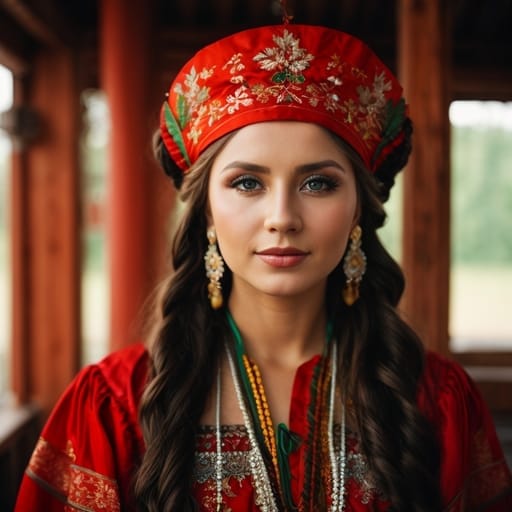
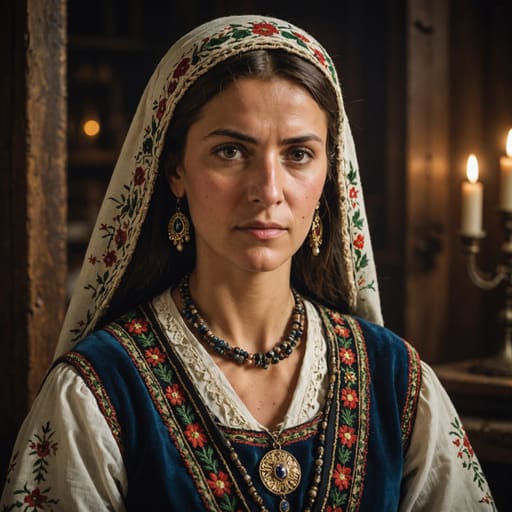
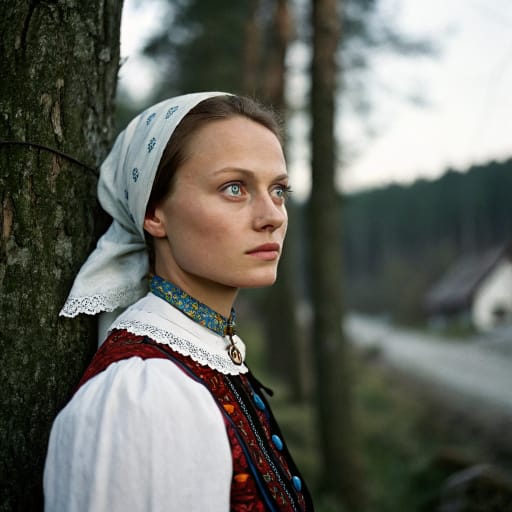
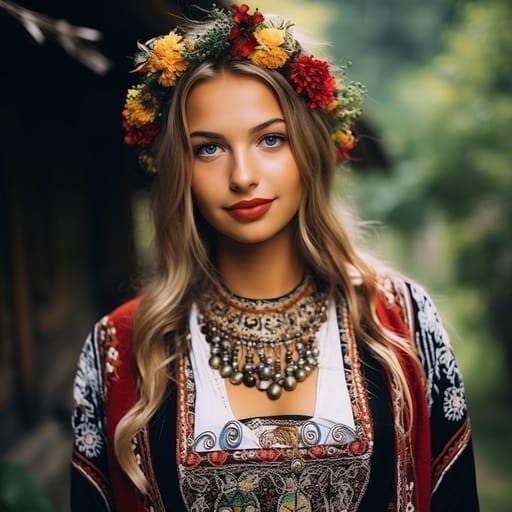
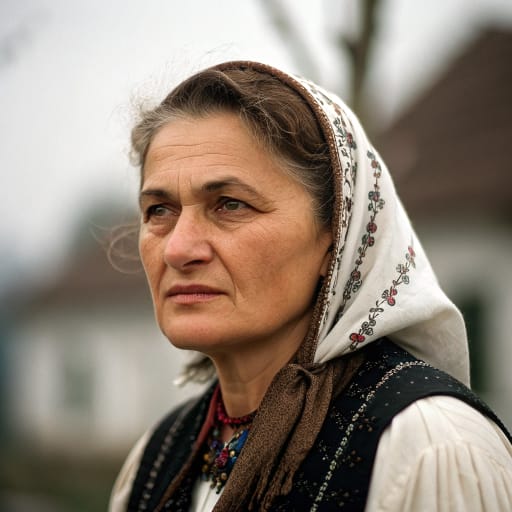
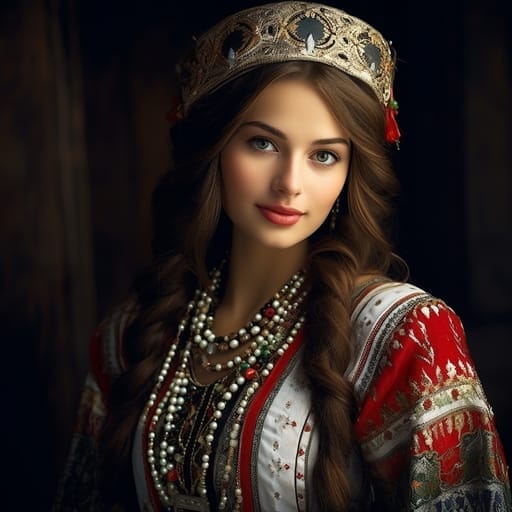
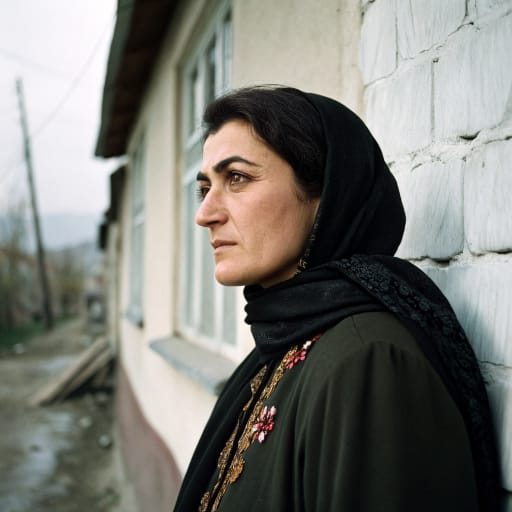
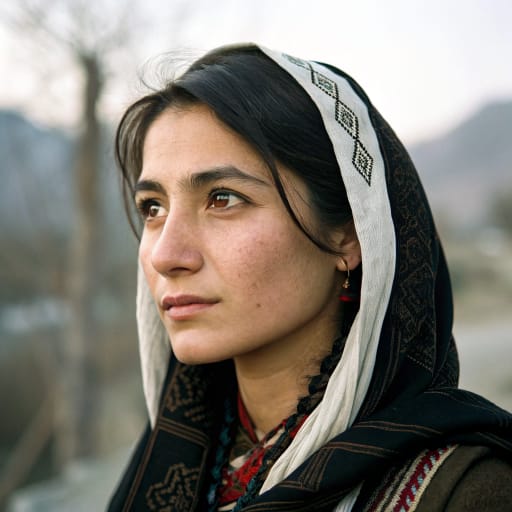
Typical Dacians Phenotypes
Reference for AI generation: hair, eyes, skin, facial structure, build
Dacians Body & Anatomy Reference
Anatomy by feature, Eastern European / Slavic phenotype
Dacians Boobs & Breasts
The typical Dacians bust is medium-to-large cup, full, moderate-to-high projection, in line with the wider Eastern European / Slavic pattern. Areolas usually fall in the 30-44mm range, with light-pink to medium-brown areolar pigmentation against the fair-to-light-brown skin tone. Compared with the smaller East Asian bust, Dacians breasts sit forward and are generally full and projecting, classic Eastern European curvy bust. A faithful AI render of Dacians tits keeps that shape and areola size.
Dacians Ass & Hips
Butt shape among Dacians women: medium-to-full, moderate-to-high projection, over medium iliac crests, full gluteal-femoral fat deposition. This follows Eastern European / Slavic ancestry and looks quite unlike the slim narrow-hip East Asian profile. An accurate Dacians ass in adult AI imagery keeps both the silhouette and the overall build (mesomorph, full hip-and-bust deposition) instead of a generic average.
Dacians Vagina & Pussy
Vulvar anatomy among Dacians women: light-pink to medium-brown labial pigmentation, varied labia minora. Pubic hair tends to be wavy medium texture, blond to dark-brown, in the usual inverted-triangle pattern. Both follow Eastern European / Slavic pigmentation, which is why Dacians pussy renders should not fall back on a pale, sparse Western template.
Dacians Dicks & Penis
The Dacians cock profile, from Eastern European / Slavic anthropometric data: regional mean ~13-14cm erect; moderate girth; light-pink to medium-brown shaft pigmentation. Pubic hair has a wavy medium texture and forms the usual inverted-V pattern. Whether Dacians men are circumcised follows religious and cultural practice rather than phenotype.
Dacians Body, Curves & Build
Build and curves among Dacians women follow the Eastern European / Slavic pattern: mesomorph, full hip-and-bust deposition, mean adult female BMI 23-26. Proportions matter as much as skin tone, so Dacians figures should keep their regional height and limb ratios.
Dacians Skin Tone & Hair Texture
The Dacians skin range is fair to light (Fitzpatrick II-III), and hair tends to be straight-to-wavy 1A-2B, light-blond to dark-brown. That combination marks the Eastern European / Slavic phenotype, and skin tone is the trait AI generators most often get wrong for Dacians women.
Explore phenotype categories
Structured taxonomy with peer-reviewed scales · 22 anatomical categories
Erotic Poses & Sex Positions
From the pose catalog: 219 named positions with reference skeletons
Frequently asked questions about Dacians people
Where is the Dacians homeland?
The Dacians homeland is Carpathian basin and lower Danube: present-day Romania and Moldova, with parts of Ukraine, Serbia, Bulgaria, Hungary and Slovakia in Eastern Europe.
What language do Dacians people speak?
Dacians people primarily speak Dacian (Indo-European, probably a close relative or dialect of Thracian); extinct, known only from names and glosses.
What religion do Dacians people practice?
The predominant religion among Dacians people is Polytheistic; cult of Zalmoxis with a belief in immortality and a powerful priestly class.






Make your own Dacians images
Five a day, free, no credits to buy. The studio starts from this group's phenotype data, so you can set body type, pose and style and keep the traits accurate.
Start with Dacians