Help us get this right
Does this portrait look right for Carpathian Germans?
Nobody has judged this one yet. You would be the first.
Carpathian Germans Erotic
Slovakia, chiefly the Bratislava area, the Hauerland around Kremnica and Handlová, and the Spiš region; historically also Carpathian Ruthenia, now Zakarpattia in Ukraine
German (Indo-European, Germanic), in regional dialects such as Zipser German; most also speak Slovak (Indo-European, Slavic), and historically many spoke Hungarian (Uralic)
Roman Catholic majority, with a substantial Lutheran minority, especially in the Spiš towns and Bratislava
Pressburg Germans, Hauerland Germans, Zipser Germans of the Upper and Lower Zips, and Germans of Carpathian Ruthenia; part of the wider German-speaking minorities of the former Kingdom of Hungary
About Carpathian Germans People
Carpathian Germans is a name that came long after the people. For centuries, German speakers in what is now Slovakia saw themselves as people of Pressburg, as Zipsers or as miners of the Hauerland. They lived in three separate areas of settlement, cut off from each other by mountains, dialect and distance. The historian Raimund Friedrich Kaindl coined the broader term. It stuck once the collapse of Austria-Hungary placed these communities inside the new Czechoslovakia, along with smaller German villages in Carpathian Ruthenia, now Zakarpattia in far western Ukraine.
Most of their ancestors arrived in the Middle Ages. Hungarian kings invited them to found towns, clear forest and mine ore, and that need grew urgent after the Mongol invasion of 1241 devastated the kingdom. The Hauerland still carries the mark of that clearing in the name itself, taken from the -hau endings of its village names. The newcomers became the townspeople of the mining towns: Kremnica, whose mint has struck coins since the fourteenth century, silver-rich Banská Štiavnica and copper-rich Banská Bystrica. In the Spiš region, the Zipsers ran a league of self-governing towns under a law code of their own. A cluster of those towns spent more than three centuries pledged to the Polish crown as security for a royal loan. The three areas never merged, and you can hear it in the speech. German around Bratislava leaned Austrian, while the Zips and the mining valleys kept distinct dialects of their own. Nearly everyone also got by in Slovak or Hungarian.
Religion divided along similar lines. The Reformation reached the Zips and the mining towns early, and Lutheran congregations held on through the Counter-Reformation. Kežmarok still has the wooden church they built at a time when Protestant churches had to be made of timber and kept outside the town walls. Even so, Catholics remained the larger group overall.
The twentieth century undid centuries of settlement in less than a decade. During the war, Franz Karmasin's German Party tied the community's organized life to Nazi Germany and the client Slovak State. As the Red Army closed in late in 1944, German authorities moved most Carpathian Germans west. Many who tried to come home were held in internment camps, lost their property under the Beneš decrees and were expelled. In June 1945, Czechoslovak soldiers at Přerov killed more than two hundred refugees on their way home, children among them. Today a few thousand people in Slovakia still declare German nationality, small associations keep the songs and dialects alive, and most descendants live in Germany and Austria.
Related ethnic groups
Groups that share Carpathian Germans's homeland, region, language, or religious tradition. These are likely candidates for comparative phenotype reference.
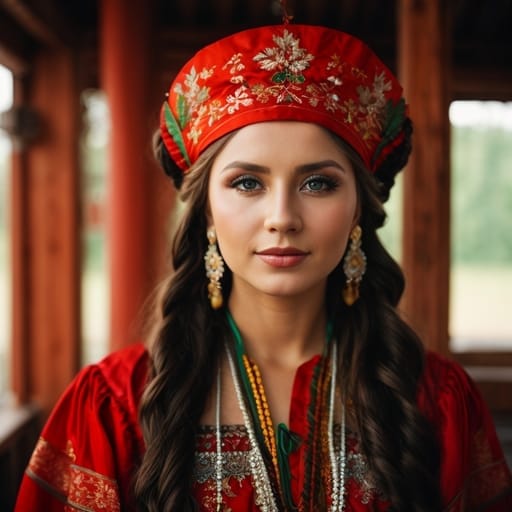
Belarusians
same region (Eastern Europe)
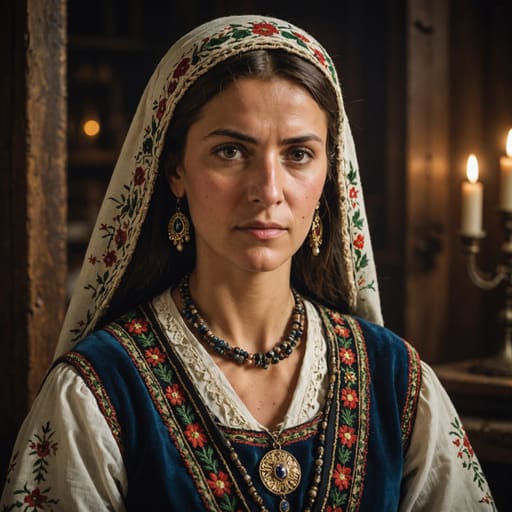
Bulgarians
same region (Eastern Europe)
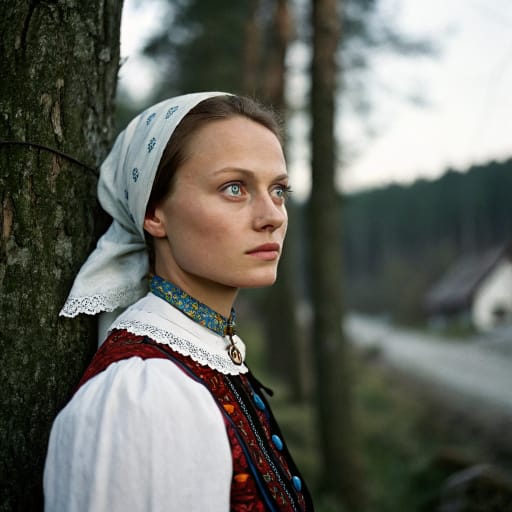
Czechs
same region (Eastern Europe)
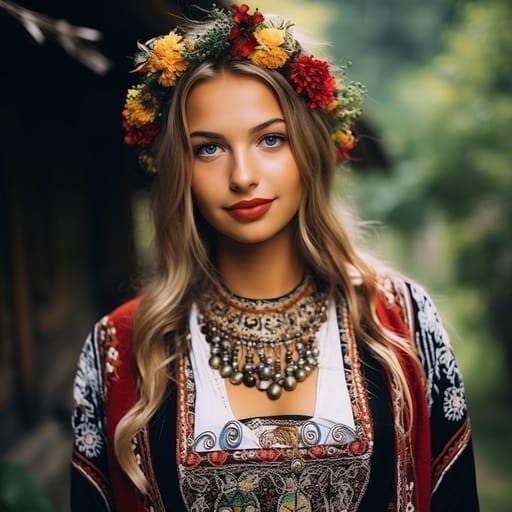
Slovaks
same region (Eastern Europe)
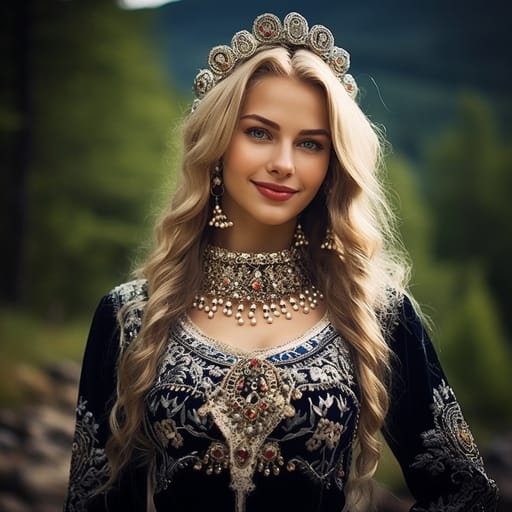
Mordvins
same region (Eastern Europe)
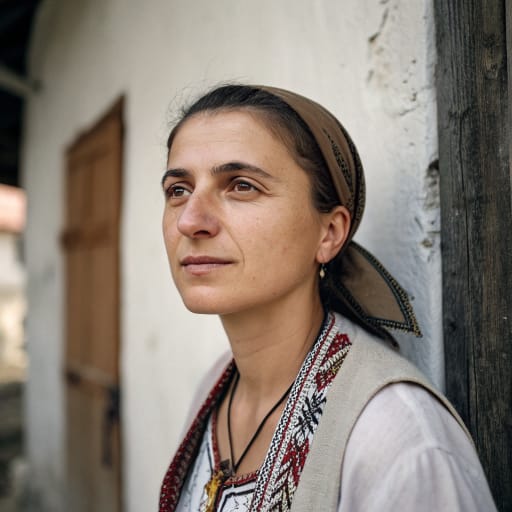
Banat Bulgarians
same region (Eastern Europe)
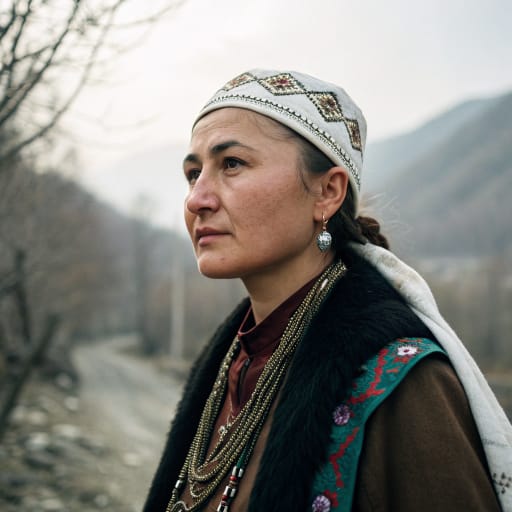
Kaitags
same region (Eastern Europe)
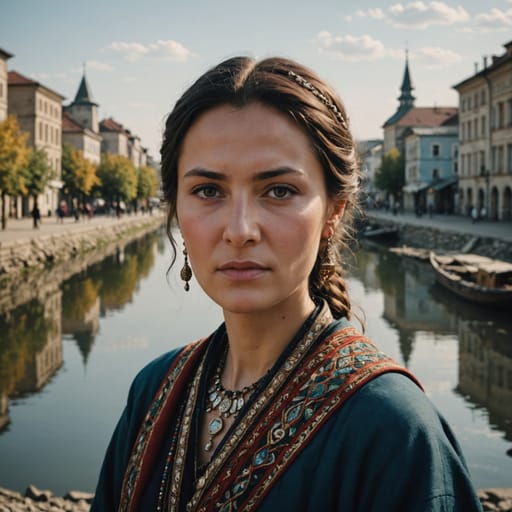
Cherkesogai
same region (Eastern Europe)
Typical Carpathian Germans Phenotypes
Reference for AI generation: hair, eyes, skin, facial structure, build
Carpathian Germans Body & Anatomy Reference
Per-feature anatomical profile for AI nude generation: Eastern European / Slavic phenotype
Carpathian Germans Boobs & Breasts
Carpathian Germans boobs follow the Eastern European / Slavic profile: medium-to-large cup, full, moderate-to-high projection. Areolar diameter is usually 30-44mm, and the coloring is light-pink to medium-brown areolar pigmentation against the fair-to-light-brown skin tone. Breast shape tracks body composition (mesomorph, full hip-and-bust deposition, mean adult female BMI 23-26), so Carpathian Germans breasts tend to be full and projecting, classic Eastern European curvy bust. Expect a forward-set shape, not the smaller East Asian bust.
Carpathian Germans Ass & Hips
Carpathian Germans ass and hip morphology presents as medium-to-full, moderate-to-high projection, distinctly different from the slim narrow-hip East Asian profile. The Carpathian Germans pelvic profile shows medium iliac crests, full gluteal-femoral fat deposition, anchored in the Eastern European / Slavic skeletal pattern. Carpathian Germans butt shots in adult AI imagery should render the medium-to-full, moderate-to-high projection silhouette with the overall build (mesomorph, full hip-and-bust deposition) and the fat distribution typical of the Eastern European / Slavic phenotype.
Carpathian Germans Vagina & Pussy
Carpathian Germans pussy anatomy typically shows light-pink to medium-brown labial pigmentation, varied labia minora. Pubic hair is usually wavy medium texture, blond to dark-brown. In AI-generated Carpathian Germans nudes, labial color should blend into the fair to light skin with a gradual transition, and the hair should keep its wavy medium texture.
Carpathian Germans Dicks & Penis
Penis reference for Carpathian Germans men: regional mean ~13-14cm erect, moderate girth. Coloring: light-pink to medium-brown shaft pigmentation. An accurate Carpathian Germans cock in AI imagery matches the surrounding fair to light skin rather than a generic porn default. Circumcision depends on religion and custom, not ancestry.
Carpathian Germans Body, Curves & Build
The Carpathian Germans figure is generally mesomorph, full hip-and-bust deposition, with mean adult female BMI 23-26, characteristic of Eastern European / Slavic ancestry. AI image tools tend to flatten regional body types into a few stock shapes; here the Carpathian Germans build is kept as its own reference.
Carpathian Germans Skin Tone & Hair Texture
Skin: fair to light (Fitzpatrick II-III). Hair: straight-to-wavy 1A-2B, light-blond to dark-brown. Both are typical of Eastern European / Slavic ancestry. The most common mistake in AI nudes of Carpathian Germans women is a body rendered lighter than the face.
Explore phenotype categories
Structured taxonomy with peer-reviewed scales · 22 anatomical categories
Erotic Poses & Sex Positions
From the pose catalog: 219 named positions with reference skeletons
Frequently asked questions about Carpathian Germans people
Where is the Carpathian Germans homeland?
The Carpathian Germans homeland is Slovakia, chiefly the Bratislava area, the Hauerland around Kremnica and Handlová, and the Spiš region; historically also Carpathian Ruthenia, now Zakarpattia in Ukraine in Eastern Europe.
What language do Carpathian Germans people speak?
Carpathian Germans people primarily speak German (Indo-European, Germanic), in regional dialects such as Zipser German; most also speak Slovak (Indo-European, Slavic), and historically many spoke Hungarian (Uralic).
What religion do Carpathian Germans people practice?
The predominant religion among Carpathian Germans people is Roman Catholic majority, with a substantial Lutheran minority, especially in the Spiš towns and Bratislava.






Make your own Carpathian Germans images
Five a day, free, no credits to buy. The studio starts from this group's phenotype data, so you can set body type, pose and style and keep the traits accurate.
Start with Carpathian Germans