No portrait yet
Polochans Erotic
The Polota and middle Western Dvina basin around Polotsk, in present-day northern Belarus
Old East Slavic (Indo-European, Slavic), in the local dialect ancestral to Belarusian; the region's river and lake names are largely Baltic
Slavic paganism, then Orthodox Christianity from the late tenth and eleventh centuries; Polotsk held one of the earliest bishoprics in Rus
Usually classed as a branch of the Krivichi; one of the East Slavic tribal groupings listed in the Primary Chronicle, and the core of the later Principality of Polotsk
About Polochans People
The Polochans were an East Slavic people of roughly the ninth through eleventh centuries who lived along the Polota river and the middle Western Dvina, in what is now northern Belarus. They did not vanish so much as get absorbed by their own success: the name stopped being useful once the Principality of Polotsk grew out of their territory, and the people themselves are among the ancestors of today's Belarusians. The Primary Chronicle names them and explains the name in one flat line, that they settled on the Dvina and were called Polochans after the small river Polota that runs into it. Most historians read them as Krivichi who took a local identity from a local river rather than as a wholly separate tribe, which is a useful correction to the idea that early Slavic tribes were sealed ethnic units. They were geography with a name attached, and the geography did most of the work.
That geography was a corridor. The Dvina is the western half of the route between the Baltic and the Dnieper, and the Polochans sat on its hinge, which is why Arab silver turns up in hoards in their fields and why Polotsk appears in the chronicle as early as 862, ahead of most towns in the region. Their neighbors were Balts, Latgalians and Selonians, and that Baltic presence is written permanently into the map: a large share of the rivers and lakes around Polotsk still carry Baltic names, given by the people the Slavs settled among rather than replaced. Politics arrived early and violently. Around 980 Vladimir of Kiev took the town, killed its prince Rogvolod and married his daughter Rogneda by force; their son Izyaslav was sent back to rule Polotsk, and the line descended from him spent the next two centuries refusing to behave like a branch office of Kiev. Its most notorious member, Vseslav Bryachislavich, held Polotsk for more than fifty years, sat briefly on the Kievan throne in 1068, and was remembered in verse as a sorcerer who ran between cities as a wolf. Christianity followed the same track: an early bishopric, a stone cathedral of St. Sophia raised in the eleventh century as a deliberate answer to the Sophias of Kiev and Novgorod, and in the twelfth century Euphrosyne of Polotsk, Vseslav's granddaughter, who took vows, copied books, founded monasteries and became the region's own saint. The Polochans as a named people are gone. The town, the river, the cathedral and a strain of stubborn local independence are all still there.
Related ethnic groups
Groups that share Polochans's homeland, region, language, or religious tradition. These are likely candidates for comparative phenotype reference.
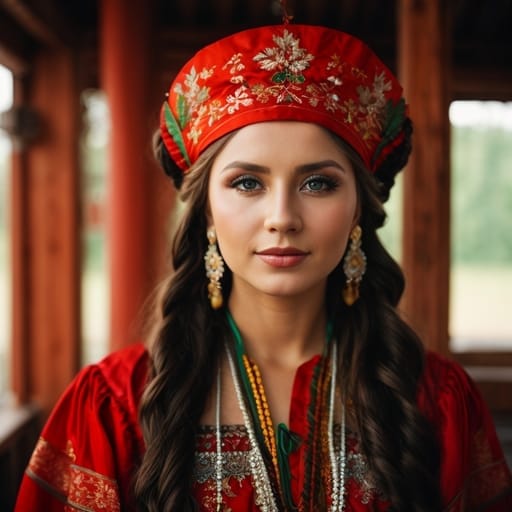
Belarusians
same region (Eastern Europe)
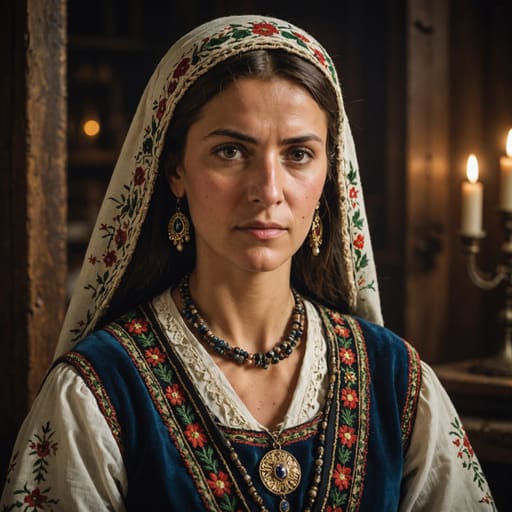
Bulgarians
same region (Eastern Europe)
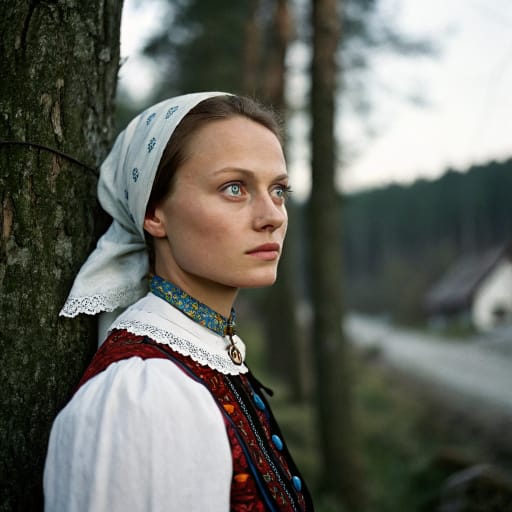
Czechs
same region (Eastern Europe)
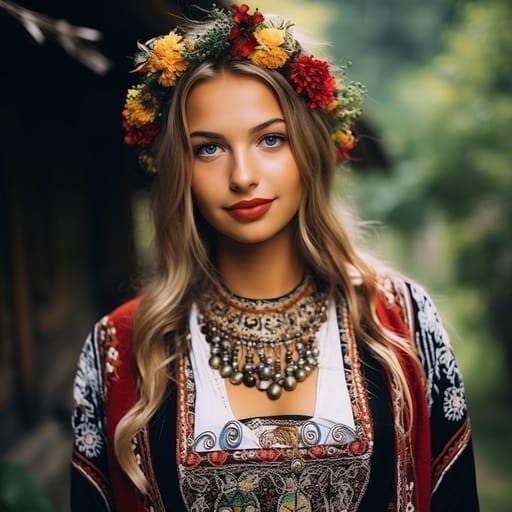
Slovaks
same region (Eastern Europe)
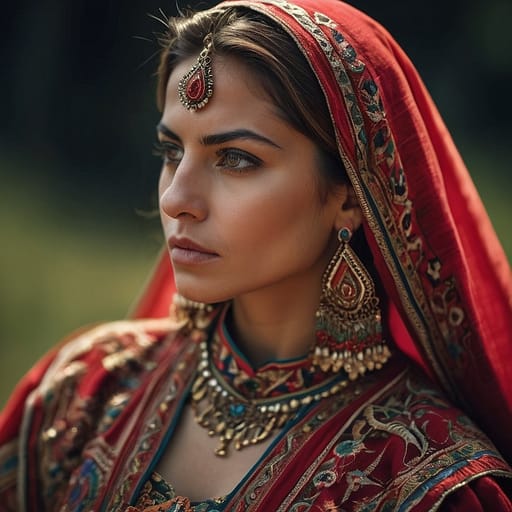
Turkish Bulgaria
same region (Eastern Europe)
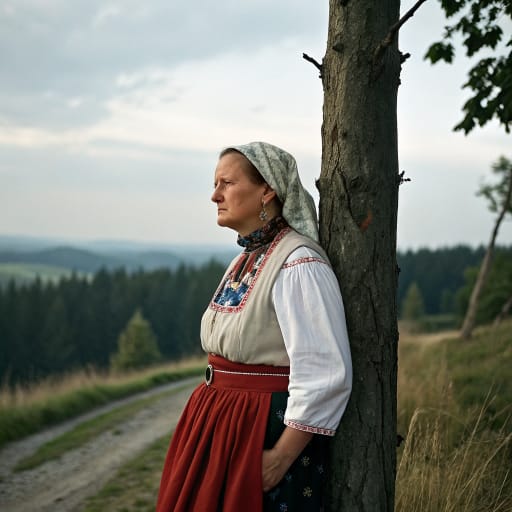
Lendians
same region (Eastern Europe)
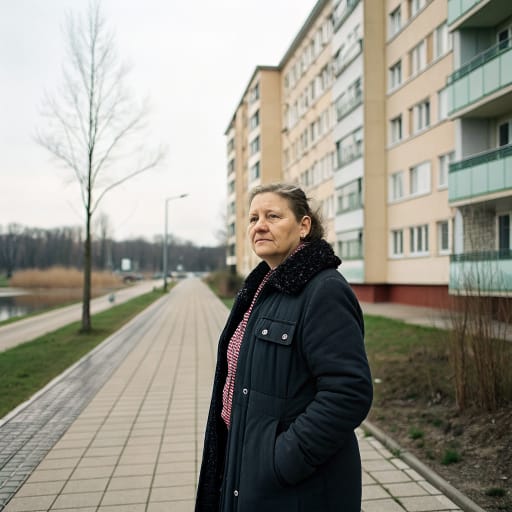
Kurpie Białe
same region (Eastern Europe)
Opolans
same region (Eastern Europe)
Typical Polochans Phenotypes
Reference for AI generation: hair, eyes, skin, facial structure, build
Polochans Body & Anatomy Reference
Eastern European / Slavic phenotype: anatomy reference for AI nude generation
Polochans Boobs & Breasts
The typical Polochans bust is medium-to-large cup, full, moderate-to-high projection, in line with the wider Eastern European / Slavic pattern. Areolas usually fall in the 30-44mm range, with light-pink to medium-brown areolar pigmentation against the fair-to-light-brown skin tone. Compared with the smaller East Asian bust, Polochans breasts sit forward and are generally full and projecting, classic Eastern European curvy bust. A faithful AI render of Polochans tits keeps that shape and areola size.
Polochans Ass & Hips
Butt shape among Polochans women: medium-to-full, moderate-to-high projection, over medium iliac crests, full gluteal-femoral fat deposition. This follows Eastern European / Slavic ancestry and looks quite unlike the slim narrow-hip East Asian profile. An accurate Polochans ass in adult AI imagery keeps both the silhouette and the overall build (mesomorph, full hip-and-bust deposition) instead of a generic average.
Polochans Vagina & Pussy
Vulvar anatomy among Polochans women: light-pink to medium-brown labial pigmentation, varied labia minora. Pubic hair tends to be wavy medium texture, blond to dark-brown, in the usual inverted-triangle pattern. Both follow Eastern European / Slavic pigmentation, which is why Polochans pussy renders should not fall back on a pale, sparse Western template.
Polochans Dicks & Penis
The Polochans cock profile, from Eastern European / Slavic anthropometric data: regional mean ~13-14cm erect; moderate girth; light-pink to medium-brown shaft pigmentation. Pubic hair has a wavy medium texture and forms the usual inverted-V pattern. Whether Polochans men are circumcised follows religious and cultural practice rather than phenotype.
Polochans Body, Curves & Build
Build and curves among Polochans women follow the Eastern European / Slavic pattern: mesomorph, full hip-and-bust deposition, mean adult female BMI 23-26. Proportions matter as much as skin tone, so Polochans figures should keep their regional height and limb ratios.
Polochans Skin Tone & Hair Texture
The Polochans skin range is fair to light (Fitzpatrick II-III), and hair tends to be straight-to-wavy 1A-2B, light-blond to dark-brown. That combination marks the Eastern European / Slavic phenotype, and skin tone is the trait AI generators most often get wrong for Polochans women.
Explore phenotype categories
Structured taxonomy with peer-reviewed scales · 22 anatomical categories
Erotic Poses & Sex Positions
From the pose catalog: 219 named positions with reference skeletons
Frequently asked questions about Polochans people
Where is the Polochans homeland?
The Polochans homeland is The Polota and middle Western Dvina basin around Polotsk, in present-day northern Belarus in Eastern Europe.
What language do Polochans people speak?
Polochans people primarily speak Old East Slavic (Indo-European, Slavic), in the local dialect ancestral to Belarusian; the region's river and lake names are largely Baltic.
What religion do Polochans people practice?
The predominant religion among Polochans people is Slavic paganism, then Orthodox Christianity from the late tenth and eleventh centuries; Polotsk held one of the earliest bishoprics in Rus.






Make your own Polochans images
Five a day, free, no credits to buy. The studio starts from this group's phenotype data, so you can set body type, pose and style and keep the traits accurate.
Start with Polochans