No portrait yet
Afro-Curaçaoans Erotic
Curaçao, a constituent country of the Kingdom of the Netherlands in the southern Caribbean off Venezuela; large diaspora in the Netherlands.
Papiamentu (Iberian-based creole); Dutch (Germanic, Indo-European); English and Spanish widely spoken.
Predominantly Roman Catholic, with growing Pentecostal and evangelical churches; brua folk healing practice persists alongside.
Part of the Afro-Caribbean and wider Dutch Caribbean population, closely related to Afro-Arubans and Afro-Bonaireans; large diaspora in the Netherlands.
About Afro-Curaçaoans People
Afro-Curaçaoans are the majority population of Curaçao, a dry, windswept island off the coast of Venezuela. Theirs is the voice behind the island's everyday language, music and politics. Their ancestors were brought from West and Central Africa by the Dutch West India Company, which turned Willemstad into one of the busiest slave markets in the Caribbean during the seventeenth century. Many captives were sold onward to Spanish colonies. Those who stayed worked on plantations that never thrived in the arid soil, on the docks and in merchant households, so the community was tied to the port and the town from early on.
What holds the community together is Papiamentu, a creole built largely on Portuguese and Spanish vocabulary with Dutch and African layers, and shared with Aruba and Bonaire. For generations Dutch was the language of school, court and government, while Papiamentu was the language of home and street. It now has official status alongside Dutch and English, and speaking it well is still a marker of belonging. Most Afro-Curaçaoans are Roman Catholic, a legacy of priests who ministered to the enslaved while the Dutch elite stayed Protestant, though Pentecostal and evangelical churches have grown. Brua, a body of herbal and ritual practice for healing and protection, persists alongside Sunday Mass despite long disapproval from the clergy.
Two uprisings anchor collective memory. On August 17, 1795, an enslaved man named Tula led a revolt that spread through the plantations of the island's west before it was crushed. Tula was executed. He is now honored as a national hero, and the anniversary is kept as a day of the struggle for freedom. Slavery itself ended in 1863. The second uprising came on May 30, 1969, when a labor dispute at the Shell refinery turned into riots that burned part of Willemstad's commercial center. Trinta di Mei, as it is called, carried Afro-Curaçaoans into political office and fed a cultural movement that put Papiamentu and African heritage at the center.
Much of the culture is carried in music. Tambú, a drum and voice form kept in time by a struck iron hoe blade called the chapi, was suppressed for generations by colonial officials and priests, partly because singers used it to air grievances and settle scores in public. It survived and is now claimed with pride. Tumba drives Carnival, and the Seú harvest parade brings out folkloric dress. A large community now lives in the Netherlands, concentrated in cities such as Rotterdam, and travel back and forth keeps the island's language and its arguments alive on both sides of the Atlantic.
Related ethnic groups
Groups that share Afro-Curaçaoans's homeland, region, language, or religious tradition. These are likely candidates for comparative phenotype reference.
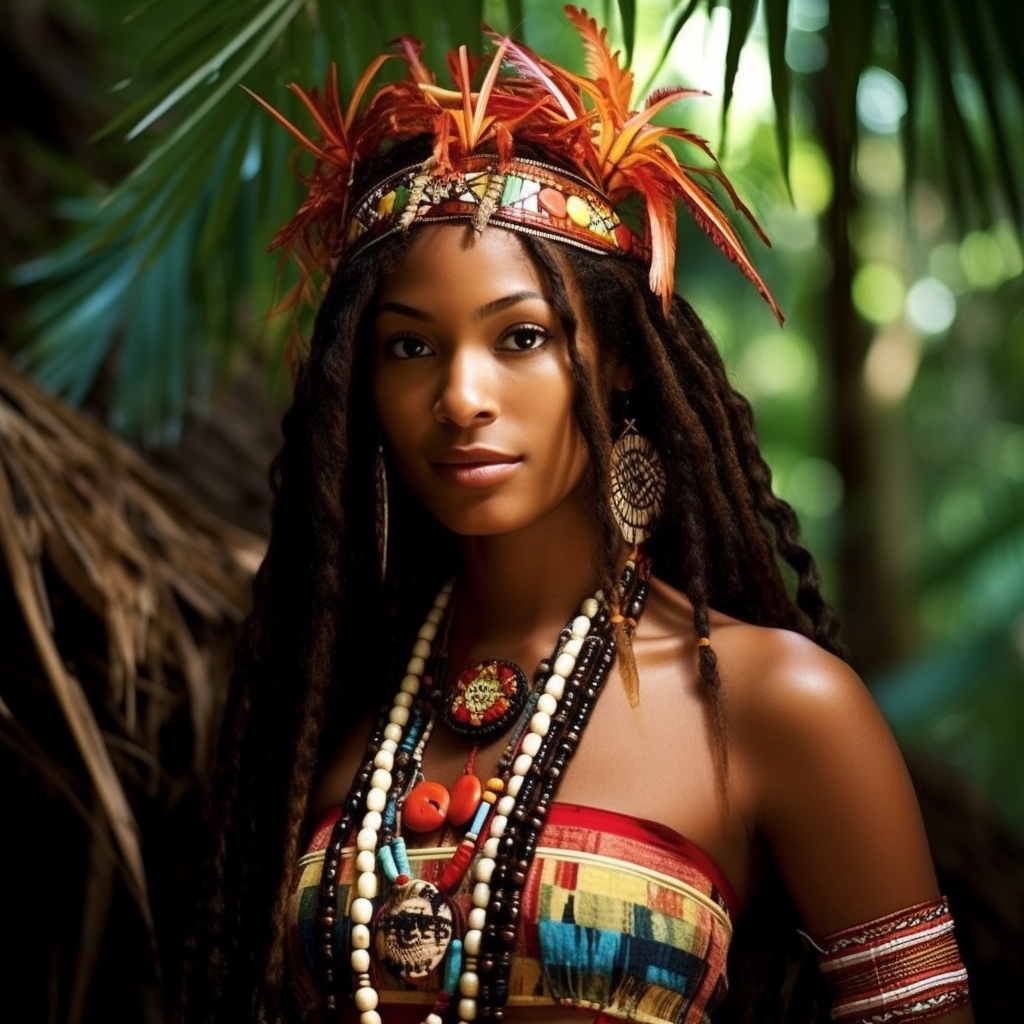
Taíno
same region (Caribbean)
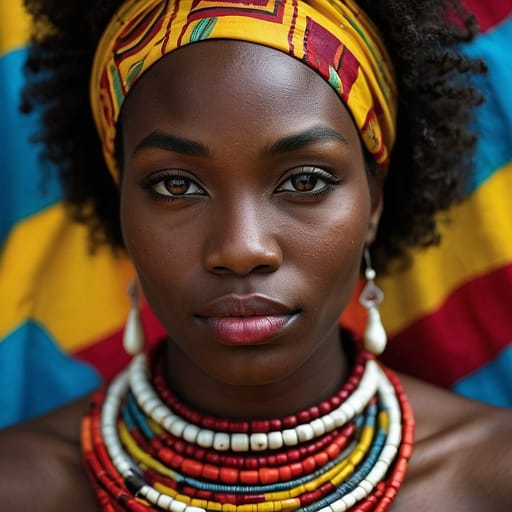
Afro-Antiguan Barbudan
same region (Caribbean)
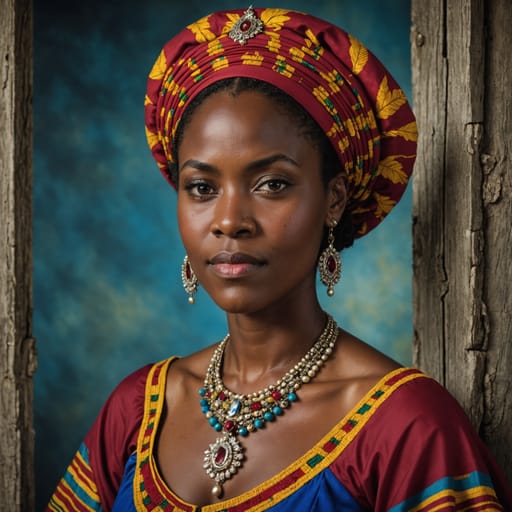
Mixed Antiguan
same region (Caribbean)
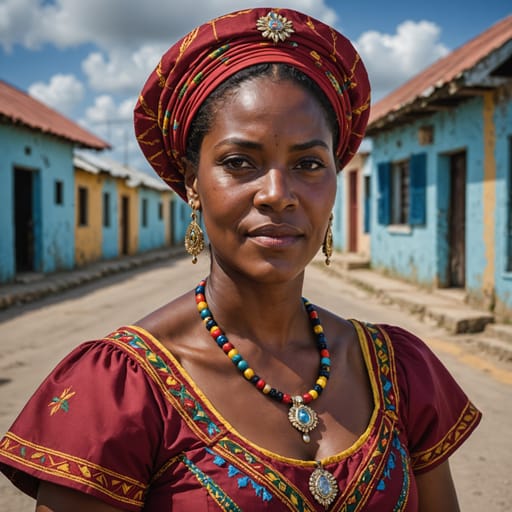
Hispanic Antiguan
same region (Caribbean)
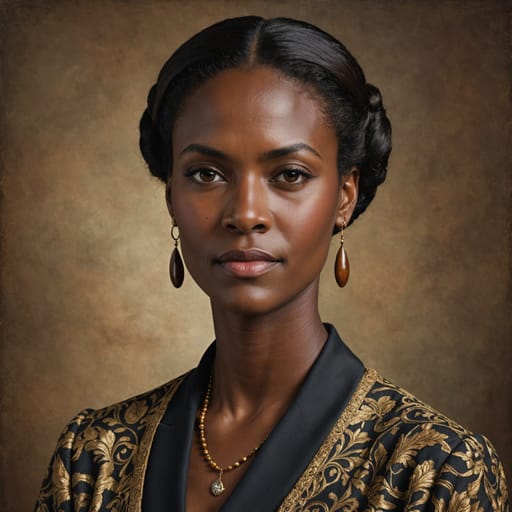
White Antiguan
same region (Caribbean)
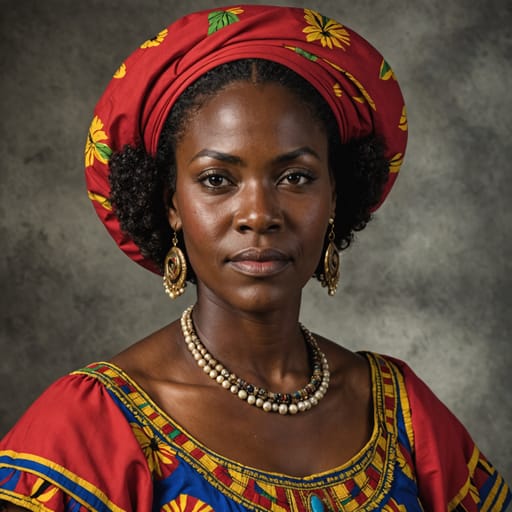
Afro-Caribbean Antiguan
same region (Caribbean)
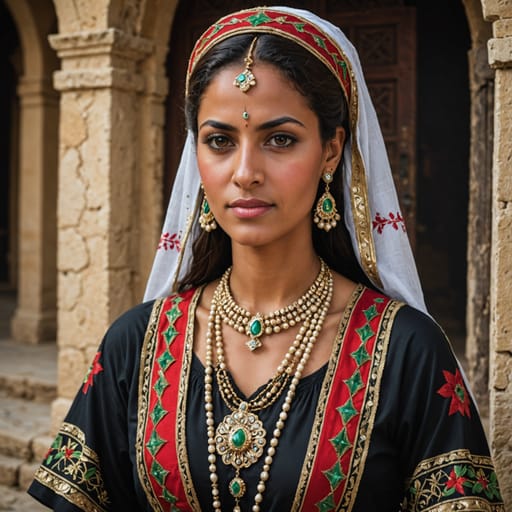
Lebanese-Syrian Caribbean
same region (Caribbean)
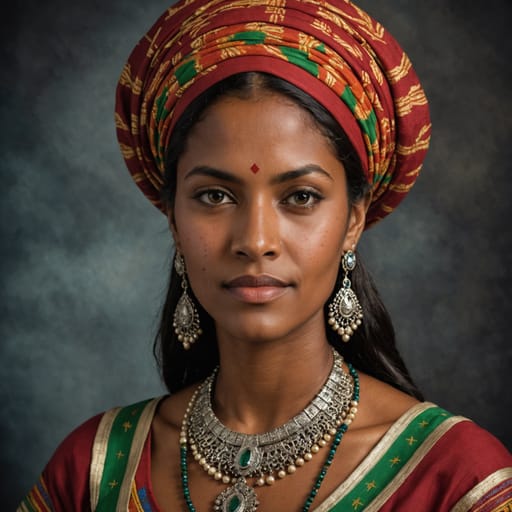
Indo-Caribbean Immigrant
same region (Caribbean)
Typical Afro-Curaçaoans Phenotypes
Reference for AI generation: hair, eyes, skin, facial structure, build
Afro-Curaçaoans Body & Anatomy Reference
Per-feature anatomical profile for AI nude generation: Afro-Caribbean / Indo-Caribbean / Creole phenotype
Afro-Curaçaoans Boobs & Breasts
The typical Afro-Curaçaoans bust is medium-to-large cup, full, high projection, in line with the wider Afro-Caribbean / Indo-Caribbean / Creole pattern. Areolas usually fall in the 34-50mm range, with medium-brown to deep-brown areolar pigmentation against the medium-to-deep-brown skin tone. Compared with the smaller East Asian bust, Afro-Curaçaoans breasts sit forward and are generally full and projecting. A faithful AI render of Afro-Curaçaoans tits keeps that shape and areola size.
Afro-Curaçaoans Ass & Hips
Butt shape among Afro-Curaçaoans women: full, high projection, wide-set glutes, over wide iliac crests, full gluteal-femoral fat deposition. This follows Afro-Caribbean / Indo-Caribbean / Creole ancestry and looks quite unlike the slim narrow-hip East Asian profile. An accurate Afro-Curaçaoans ass in adult AI imagery keeps both the silhouette and the overall build (mesomorph with strong gluteal-femoral deposition) instead of a generic average.
Afro-Curaçaoans Vagina & Pussy
Vulvar anatomy among Afro-Curaçaoans women: medium-brown to deep-brown labial pigmentation, fuller labia minora. Pubic hair tends to be tightly-coiled to wavy coarse texture, in the usual inverted-triangle pattern. Both follow Afro-Caribbean / Indo-Caribbean / Creole pigmentation, which is why Afro-Curaçaoans pussy renders should not fall back on a pale, sparse Western template.
Afro-Curaçaoans Dicks & Penis
The Afro-Curaçaoans cock profile, from Afro-Caribbean / Indo-Caribbean / Creole anthropometric data: regional mean ~14cm erect; above-average girth; deep-brown shaft pigmentation. Pubic hair has a tightly-coiled to wavy coarse texture and forms the usual inverted-V pattern. Whether Afro-Curaçaoans men are circumcised follows religious and cultural practice rather than phenotype.
Afro-Curaçaoans Body, Curves & Build
Build and curves among Afro-Curaçaoans women follow the Afro-Caribbean / Indo-Caribbean / Creole pattern: mesomorph with strong gluteal-femoral deposition, mean adult female BMI 26-29. Proportions matter as much as skin tone, so Afro-Curaçaoans figures should keep their regional height and limb ratios.
Afro-Curaçaoans Skin Tone & Hair Texture
The Afro-Curaçaoans skin range is medium-to-deep brown (Fitzpatrick IV-VI), and hair tends to be tight 4A-4C coil predominant in Afro-Caribbean; 1A-2B straight-to-wavy in Indo-Caribbean. That combination marks the Afro-Caribbean / Indo-Caribbean / Creole phenotype, and skin tone is the trait AI generators most often get wrong for Afro-Curaçaoans women.
Explore phenotype categories
Structured taxonomy with peer-reviewed scales · 22 anatomical categories
Erotic Poses & Sex Positions
From the pose catalog: 219 named positions with reference skeletons
Frequently asked questions about Afro-Curaçaoans people
Where is the Afro-Curaçaoans homeland?
The Afro-Curaçaoans homeland is Curaçao, a constituent country of the Kingdom of the Netherlands in the southern Caribbean off Venezuela; large diaspora in the Netherlands. in Caribbean.
What language do Afro-Curaçaoans people speak?
Afro-Curaçaoans people primarily speak Papiamentu (Iberian-based creole); Dutch (Germanic, Indo-European); English and Spanish widely spoken..
What religion do Afro-Curaçaoans people practice?
The predominant religion among Afro-Curaçaoans people is Predominantly Roman Catholic, with growing Pentecostal and evangelical churches; brua folk healing practice persists alongside..






Make your own Afro-Curaçaoans images
Five a day, free, no credits to buy. The studio starts from this group's phenotype data, so you can set body type, pose and style and keep the traits accurate.
Start with Afro-Curaçaoans