Help us get this right
Does this portrait look right for Galicians?
Nobody has judged this one yet. You would be the first.
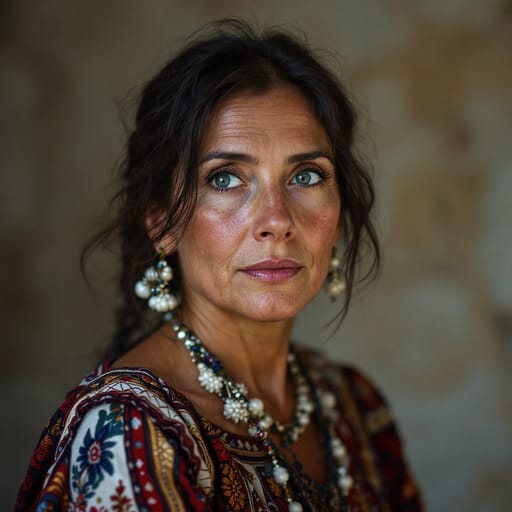
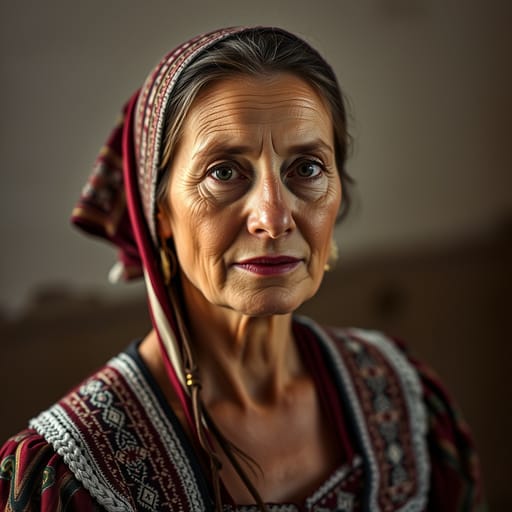
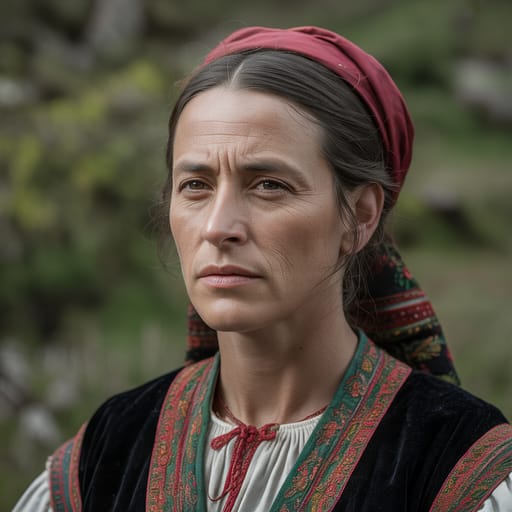
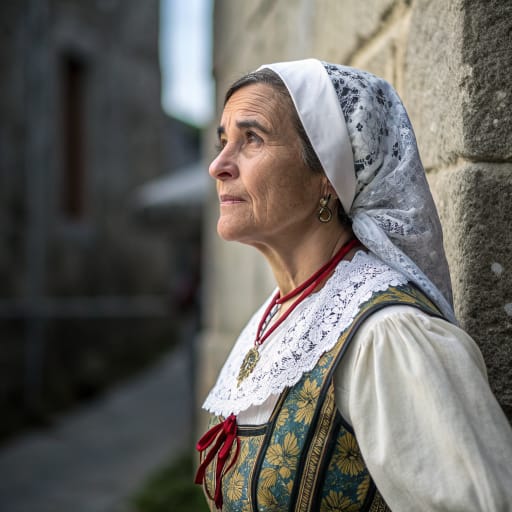
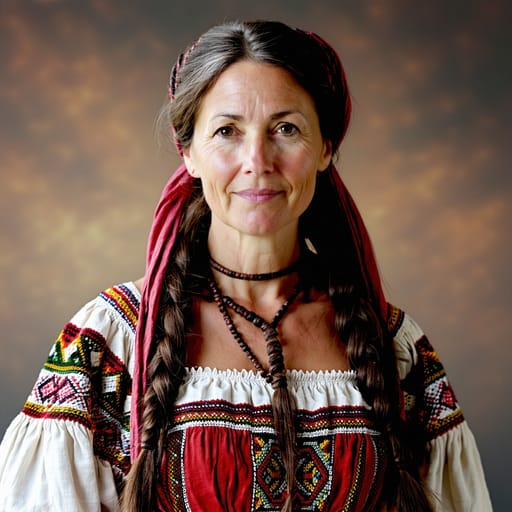
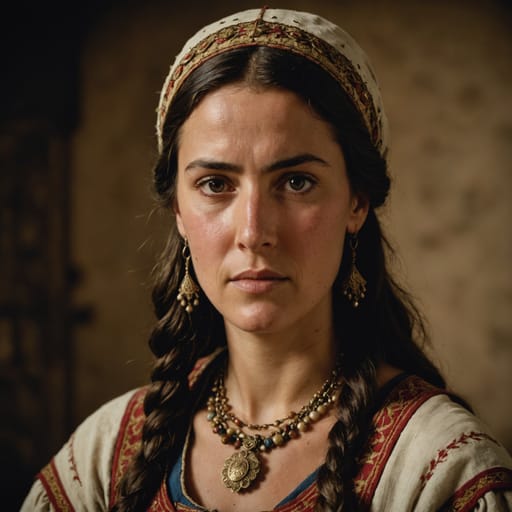
How 6 image generators render Galicians
The same documentary prompt sent to each generator; one render each, alphabetical by generator. The comparison page has every render, the match to documented photographs and the reader pairs.
Galicians Erotic
Galicia (Spain)
Christianity / Catholicism
About Galicians People
The Galicians are the people of Spain's far northwest corner — a green, rain-soaked country of granite hills, river estuaries, and Atlantic coastline that has more in common, climatically and temperamentally, with Brittany or western Ireland than with Madrid or Andalusia. They are the descendants of Celtic and pre-Roman populations layered over by Roman administration and the medieval Suevic kingdom, and that northern, Atlantic-facing inheritance is something Galicians tend to insist on. The bagpipe (the gaita) is not a tourist prop here; it is the regional instrument, played at parish festivals and on public holidays with the seriousness other regions reserve for guitars.
Their language, Galician (galego), is the closest living relative of Portuguese — the two split off the same medieval Galician-Portuguese trunk around the twelfth century, when the southern variant followed the Reconquista down the Atlantic coast and Galician stayed home. To a Spanish speaker it is intelligible with effort; to a Portuguese speaker it sounds like an older, more conservative cousin. After centuries as a kitchen-and-fields language suppressed under Franco, it is now co-official with Castilian, taught in schools, and the working language of regional government, though usage varies sharply between rural interior and urbanized coast.
Catholicism is the formal religion and the rhythm of the calendar — Santiago de Compostela, the alleged burial place of the apostle James, has anchored a pilgrimage route across Europe for a thousand years and remains the single fact most outsiders know about the region. But Galician Catholicism sits on top of an older substrate that has never quite been pushed under: a folk metaphysics of meigas (witches), the Santa Compaña (a procession of the dead said to walk country lanes at night), evil eye, and ritual cures. Educated Galicians will tell you they don't believe in any of it, then add that they wouldn't tempt it either.
The other defining fact is emigration. For a century and a half Galicia has exported people — to Cuba, Argentina, Venezuela, Switzerland, Germany — to the point that in parts of Latin America gallego became a generic word for "Spaniard." This produced a particular cultural temperament the Galicians have a word for: morriña, a homesickness specifically for Galicia, for its damp light and its food and the sound of its language, felt most acutely by those who had to leave to find work.
Related ethnic groups
Groups that share Galicians's homeland, region, language, or religious tradition. These are likely candidates for comparative phenotype reference.
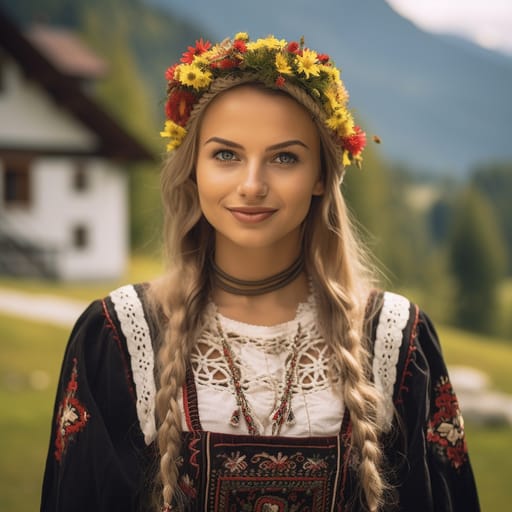
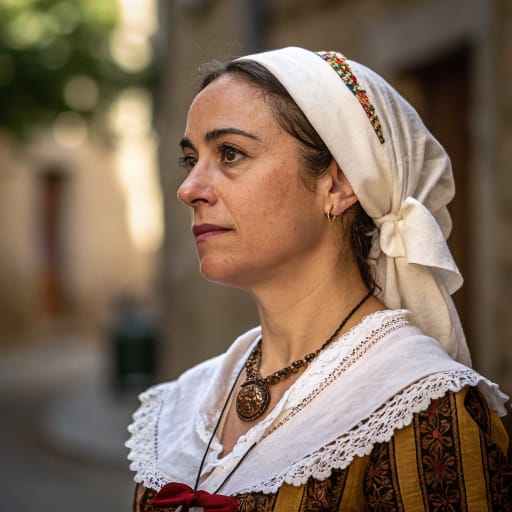
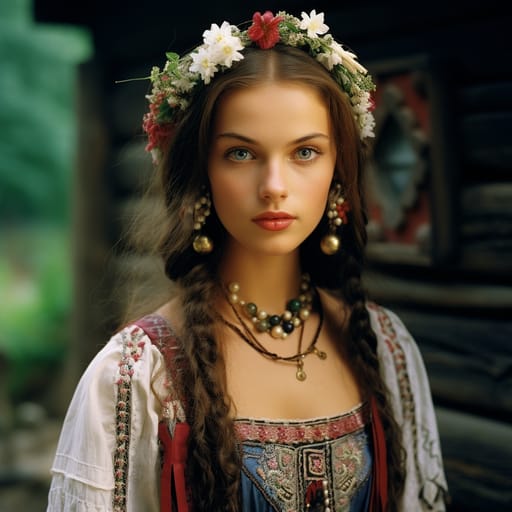
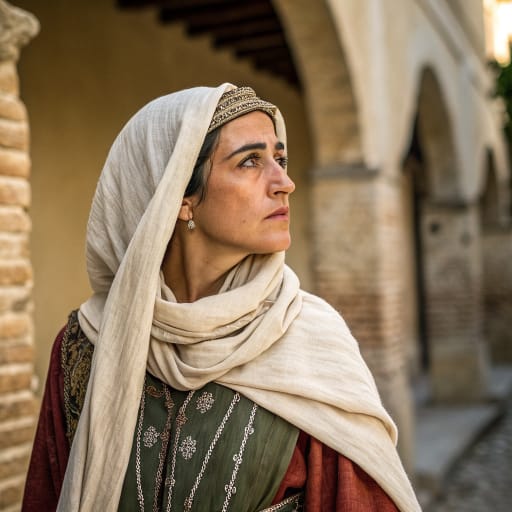
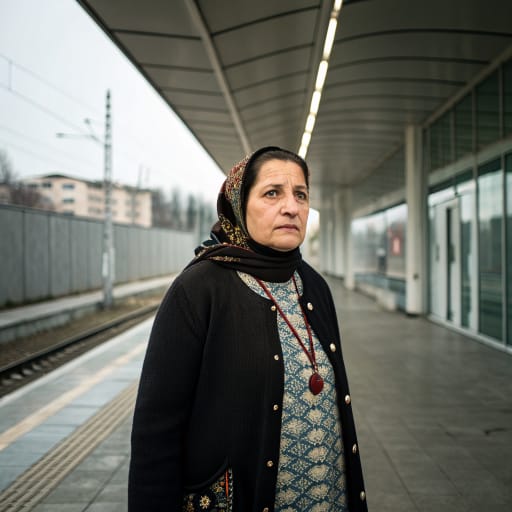
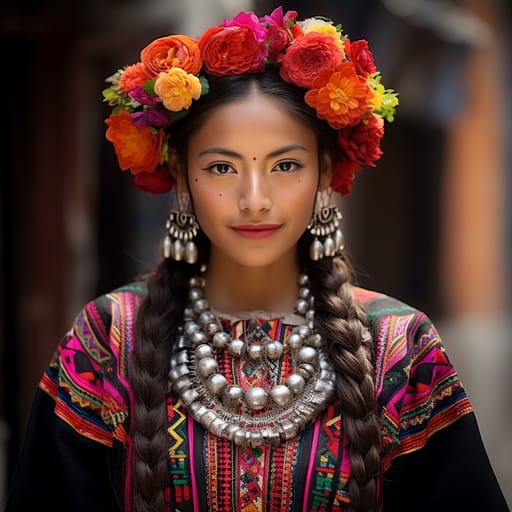
Typical Galicians Phenotypes
Reference for AI generation: hair, eyes, skin, facial structure, build
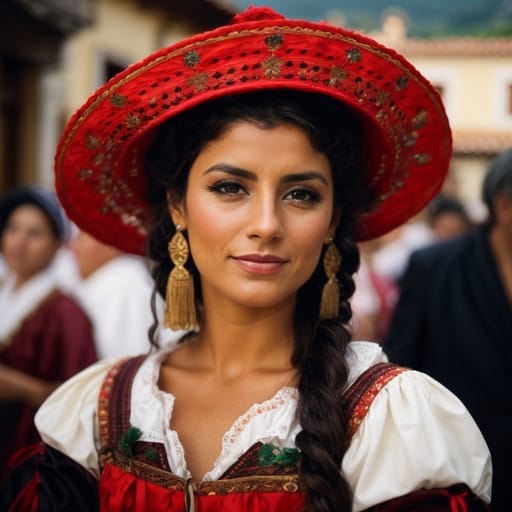
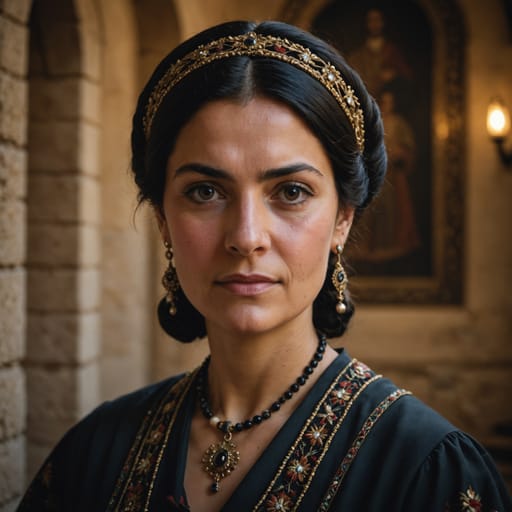
Galicians sit at the Atlantic edge of Iberia and look the part — they read as Northwestern European more often than Mediterranean. The distinctive thing about the Galician phenotype is how much lighter it runs than the Castilian or Andalusian baseline most people picture when they think "Spanish." Centuries of relative isolation behind the Cordillera Cantábrica, plus Suebi and Celtic ancestry layered over the older Iberian substrate, produced a population that genetically clusters closer to the Irish and Bretons than to southern Spaniards.
Hair runs predominantly chestnut to dark brown, with a meaningful minority of medium and light brown, and a small but visible blonde fraction in children that often darkens with age. Texture is usually straight to loosely wavy; tight curl is uncommon. Red and auburn appear at rates well above the Spanish average, a Celtic-fringe signature. Eyes follow the same pattern — brown remains the plurality, but green, hazel, and grey-blue together account for a substantial share, higher than anywhere else in Spain. The eye shape is straight, almond-set, with no epicanthic fold and a generally deep-set socket under a moderately heavy brow.
Skin sits at Fitzpatrick II–III with cool to neutral undertones — fair, freckle-prone, burns before it tans, the opposite of the olive Mediterranean default. Facial structure tends toward a straight-to-slightly-aquiline nose with a narrow alar base, a moderately full lower lip over a thinner upper, and a defined jaw with prominent zygomatic bones that gives older faces a hollow-cheeked, weathered look — see Fernando Rey, or the Estevez/Sheen line. Build is short to medium-statured by Northern European standards but average for Iberia, broadly framed in the shoulders, with a tendency to compact muscularity in men and a fuller, hourglass build in women. Coastal A Coruña and Pontevedra populations skew slightly fairer and lighter-eyed than inland Ourense and Lugo, where the phenotype is marginally darker and closer to the broader Iberian average.
Galicians Body & Anatomy Reference
Anatomy by feature, Southern European / Mediterranean phenotype
Galicians Boobs & Breasts
The typical Galicians bust is medium-to-large cup, full, moderate-to-high projection, in line with the wider Southern European / Mediterranean pattern. Areolas usually fall in the 32-46mm range, with medium-brown to dark-brown areolar pigmentation against the olive-to-light-brown skin tone. Compared with the lighter pigmentation of the Northern European bust, Galicians breasts sit forward and are generally full and projecting, generally the classic Mediterranean curvy bust profile. A faithful AI render of Galicians tits keeps that shape and areola size.
Galicians Ass & Hips
Butt shape among Galicians women: medium-to-full, moderate-to-high projection, broader hip profile, over medium-to-wide iliac crests, full gluteal-femoral fat distribution. This follows Southern European / Mediterranean ancestry and looks quite unlike the slim Northern European narrow-hip pattern. An accurate Galicians ass in adult AI imagery keeps both the silhouette and the overall build (mesomorph with full hip-and-bust deposition) instead of a generic average.
Galicians Vagina & Pussy
Vulvar anatomy among Galicians women: medium-brown to dark-brown labial pigmentation, fuller labia minora. Pubic hair tends to be wavy-to-curly medium-coarse dark texture, dense distribution, in the usual inverted-triangle pattern. Both follow Southern European / Mediterranean pigmentation, which is why Galicians pussy renders should not fall back on a pale, sparse Western template.
Galicians Dicks & Penis
The Galicians cock profile, from Southern European / Mediterranean anthropometric data: regional mean ~13-14cm erect; moderate girth; medium-brown shaft pigmentation. Pubic hair has a wavy-to-curly medium-coarse dark texture and forms the usual inverted-V pattern. Whether Galicians men are circumcised follows religious and cultural practice rather than phenotype.
Galicians Body, Curves & Build
Build and curves among Galicians women follow the Southern European / Mediterranean pattern: mesomorph with full hip-and-bust deposition, mean adult female BMI 24-28. Proportions matter as much as skin tone, so Galicians figures should keep their regional height and limb ratios.
Galicians Skin Tone & Hair Texture
The Galicians skin range is olive to medium (Fitzpatrick III-IV), and hair tends to be wavy-to-curly 2B-3B, dark-brown to black. That combination marks the Southern European / Mediterranean phenotype, and skin tone is the trait AI generators most often get wrong for Galicians women.
Data depth
69/100Coverage of image-grounded phenotype observations · drives AI generation diversity
- Sample size
- 40/40· 80 images
- Image quality
- 19/30· 39% high
- Confidence
- 10/20· mean 0.66
- Source diversity
- 0/10· wikipedia
- ·Wikipedia-only source, not population-representative
Observed Distribution: Image Sample
Empirical observations from analyzed photographs · supplementary signal, not population truth
Sample: 80 images analyzed (80 wikipedia). Quality: 31 high, 37 medium, 8 low, 4 very_low. Avg analyzer confidence: 0.66.
Skin tone (Fitzpatrick): II (64%), III (25%), IV (5%), unclear (6%)
Hair color: gray/white (36%), black (36%), dark brown (13%), blonde (5%), light/medium brown (4%), brown (3%), other (1%), unclear (3%)
Hair texture: straight (44%), wavy (38%), curly (11%), covered (4%), unclear (4%)
Eye color: dark brown (35%), blue (10%), brown (8%), hazel (6%), unclear (41%)
Epicanthic fold: 1% present, 83% absent, 16% unclear
Caveats: Sample is 100% Wikipedia notable people, which skews toward male, public-life, and modern figures, not population-representative.
Last aggregated: May 7, 2026
Explore phenotype categories
Structured taxonomy with peer-reviewed scales · 22 anatomical categories
- SkinFitzpatrick I to VI, undertone, pigmentation
- EyesColor, shape, eyelid, epicanthic fold
- Head hairColor, Andre Walker texture, hairline
- Body shapeHeath-Carter somatotype, WHR, frame
- NoseBridge, tip, nostril, alar width
- Lips & mouthVolume, Cupid’s bow, philtrum
Measured in Galicians portraits
Notable Galicians People
100 reference figures, sourced from Wikipedia
- Delmi Álvarez, photographer
- Maruja Mallo, 1902-1995), painter
- Mariano Grueiro, born 1975), activist, writer, photographer, filmmaker, artist
- Francisco Calvelo, born 1982), filmmaker
- Fernando Álvarez de Sotomayor y Zaragoza, 1875-1960), painter
- Gregorio Fernández, 1576-1636), Baroque sculptor
- Victor Moscoso, born 1936), Spanish-American artist
- Luís Seoane, 1910-1979), lithographer and artist
- Isaac Díaz Pardo, 1920-2012), artist and businessman
- María Casares, 1922-1996)
- José Garcia (actor), born 1966)
- Nancho Novo, born 1958)
- La Belle Otero, 1868-1965), dancer, actress, and courtesan
- Fernando Rey, 1917-1994)
- Martin Sheen, a.k.a. Ramon Estevez (born 1940) (part Irish, part Galician)
- Charlie Sheen, a.k.a. Carlos Estevez (born 1965) (father part Galician)
- Emilio Estevez, born 1962) (father part Galician)
- Luis Tosar, born 1971)
- Jesús Vázquez, born 1965)
- Paula Vázquez, born 1974)
- Pedro Alonso, born 1971)
- Dafne Keen, born 2005) (mother Galician)
- Bernal de Bonaval, 13th century), troubadour
- Avelino Cachafeiro, 1899-1972), bagpiper
- Luz Casal, born 1958), singer
- Manu Chao, born 1961) (father from Vilalba), singer
- Martín Codax, fl. 13th and 14th centuries), medieval composer and performer
- Iván Ferreiro, born 1970), singer
- Fuxan Os Ventos, folk music group
- Jerry Garcia, 1942-1995) (part Galician, part Irish and Swedish), founding member of Americ…
- Isabel Granada, born 1976) (mother from Ferrol), singer
- Enrique Iglesias, born 1975) (grandfather from Ourense), singer
- Julio Iglesias, born 1943) (father from Ourense), singer
- Carlos Leal, born 1969), Swiss rapper and actor born to Galician immigrants
- Anxo Lorenzo, born 1974), bagpiper
- Luar na Lubre, Celtic music group
- Mendinho, fl. 13th century), medieval troubadour
- Milladoiro, Celtic music group
- Carlos Núñez, born 1971), musician and bagpiper
- Natalia Oreiro, born 1977), singer
- Cristina Pato, born 1970), bagpiper
- Manuel Ramil, born 1978), power metal keyboardist
- Rosalía, born 1992), (father part Galician), singer
- Paulina Rubio, born 1971) (father from A Coruña), singer
- Marta Sánchez, born 1966) (both parents from A Coruña), singer
- Susana Seivane, born 1976), bagpiper
- C. Tangana, born 1990), (father from Vigo), rapper
- Siniestro Total, punk rock group
- Los Suaves, hard rock band
- Octavio Vázquez, born 1972), composer
- Marilar Aleixandre, born 1947)
- Concepción Arenal, 1820-1893), writer and feminist
- Xela Arias, 1962-2003)
- Eduardo Blanco Amor, 1897-1979), writer and journalist
- Carmen Blanco, born 1954)
- Xurxo Borrazás, born 1963)
- Ana Isabel Boullón Agrelo, born 1962), linguist
- Ricardo Carvalho Calero, 1910-1990)
- Yolanda Castaño, born 1977), poet
- Castelao, 1886-1950), writer, politician, and painter
- Rosalía de Castro, 1837-1885), writer
- Camilo José Cela, 1916-2002), writer, Nobel Prize in Literature
- Ramón Chao, 1935-2018)
- Álvaro Cunqueiro, 1911-1981), writer and journalist
- Manuel Curros Enríquez, 1851-1908), writer
- María Magdalena Domínguez, 1922-2021), poet
- Estíbaliz Espinosa Río, born 1974), science poet and singer
- Benito Jerónimo Feijóo y Montenegro, 1676-1764)
- Wenceslao Fernández Flórez, 1885-1964)
- Agustín Fernández Mallo, born 1967)
- Celso Emilio Ferreiro, 1912-1979)
- Xesús Ferro Ruibal, born 1944)
- Ricardo Flores Peres, 1903-2002)
- Suso de Toro, born 1956), writer
- Béa González, born 1962), writer
- Beremundo González Rodríguez, 1909-1986)
- Juana Teresa Juega López, 1885-1979), poet
- María López Sández, born 1973), philologist and essayist
- Salvador de Madariaga, 1886-1978), diplomat, writer, historian, and pacifist
- Luis Mariñas, 1947-2010), journalist
- María Mariño, 1907-1967)
- Xosé Luís Méndez Ferrín, born 1938), writer, proposed for the Nobel Prize
- José María Merino, born 1941)
- Manuel Murguía, 1833-1923)
- Xosé Neira Vilas, 1928-2015)
- Olga Novo, born 1975)
- Albino Núñez Domínguez, 1901-1974)
- Pilar Pallarés, born 1957), poet
- Emilia Pardo Bazán, 1851-1921), writer and feminist
- Chus Pato, born 1955)
- Otero Pedrayo, 1888-1976)
- Emma Pedreira, born 1978), writer
- Ánxeles Penas, born 1943), poet
- Eduardo Pondal, 1835-1917)
- José María Posada, 1817-1886)
- Luz Pozo Garza, 1922-2020), poet
- Ignacio Ramonet, born 1943)
- Ismael Ramos, born 1994), writer
- Jacinto Rey, born 1972)
- Ofelia Rey Castelao, born 1956)
Erotic Poses & Sex Positions
From the pose catalog: 219 named positions with reference skeletons
Frequently asked questions about Galicians people
Where is the Galicians homeland?
The Galicians homeland is Galicia (Spain) in Southern Europe.
What language do Galicians people speak?
Galicians people primarily speak Indo-European / Romance / Galician.
What religion do Galicians people practice?
The predominant religion among Galicians people is Christianity / Catholicism.






Make your own Galicians images
Five a day, free, no credits to buy. The studio starts from this group's phenotype data, so you can set body type, pose and style and keep the traits accurate.
Start with Galicians