Turks nose: bridge, tip and nostril shape in 14 observed portraits
Turks: bridge profile (sagittal) Straight in 71% of 14; bridge height Medium in 86% of 14; bridge width Medium in 86% of 14; tip shape and definition Bulbous / round in 57% of 14; nostril shape Oval, horizontal in 100% of 13; alar base width Balanced in 64% of 14; nasal length (proportional) Balanced in 100% of 14.
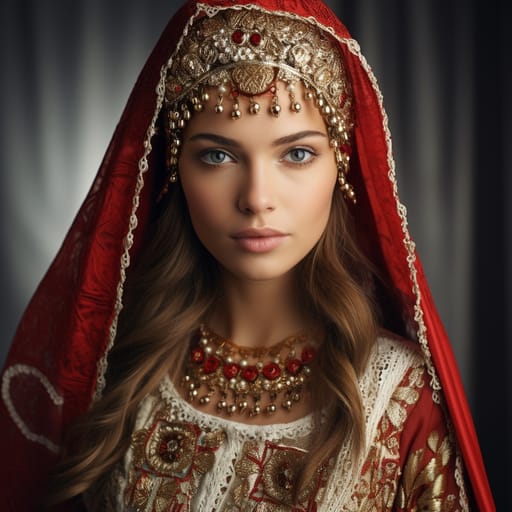
Catalog portraits for Turks are AI-generated adult subjects; the measurements on this page come from documented photographs of real people, not from these images.
Bridge profile (sagittal)
n = 14 assessableShape of the nasal dorsum in the sagittal (side-view) plane. The single most ethnically-variant nasal dimension.
| Value | Share | n | |
|---|---|---|---|
| StraightLinear dorsum from radix to tip; no convex or concave deviation. | 71% | 10 | |
| Mildly convexSubtle dorsal convexity without a frank hump. | 29% | 4 |
Vocabulary: Bridge profile (sagittal) (rhinoplasty_dorsal_profile)
Bridge height
n = 14 assessableVertical projection of the nasal dorsum from the facial plane. A primary axis of ethnic variation independent of bridge profile shape.
| Value | Share | n | |
|---|---|---|---|
| MediumAverage dorsal projection. | 86% | 12 | |
| Prominent / high-setMarked dorsal projection. Common in European, Mediterranean, Middle Eastern, and some indigenous American populations. | 14% | 2 |
Vocabulary: Bridge height (nasal_dorsum_height_qualitative)
Bridge width
n = 14 assessableWidth of the nasal dorsum at the mid-dorsum point, relative to the intercanthal distance.
| Value | Share | n | |
|---|---|---|---|
| NarrowMid-dorsum width less than approximately 60% of intercanthal distance. | 7% | 1 | |
| MediumMid-dorsum width approximately 60-80% of intercanthal distance. | 86% | 12 | |
| WideMid-dorsum width approximately equal to or exceeding intercanthal distance. | 7% | 1 |
Vocabulary: Bridge width (nasal_dorsum_width_qualitative)
Tip shape and definition
n = 14 assessableMorphology and definition of the nasal tip — encompassing both shape (the silhouette) and definition (visibility of the lower lateral cartilage anatomy).
| Value | Share | n | |
|---|---|---|---|
| Bulbous / roundWide, fleshy, rounded tip with little visible cartilage definition. | 57% | 8 | |
| Defined / refinedTip has clear definition with visible tip-defining points but is not pointed; smooth supratip break. | 43% | 6 |
Vocabulary: Tip shape and definition (rohrich_tip_morphology)
Nostril shape
n = 13 assessableShape of the nostril aperture as visible from inferior view. Significant ethnic variation — round vs oval predominantly maps to West African vs European populations.
| Value | Share | n | |
|---|---|---|---|
| Oval, horizontalLong axis of nostril roughly parallel to the alar base; common in some Sub-Saharan African populations. | 100% | 13 |
Vocabulary: Nostril shape (farkas_nostril_typology)
Alar base width
n = 14 assessableWidth of the nasal base measured between the most lateral points of the alae. The aesthetic reference is alar base width approximately equal to intercanthal distance, but this norm is European-derived and does not apply across all populations.
| Value | Share | n | |
|---|---|---|---|
| NarrowAlar base width substantially less than intercanthal distance. | 7% | 1 | |
| BalancedAlar base width approximately equal to intercanthal distance. | 64% | 9 | |
| WideAlar base width substantially greater than intercanthal distance. Common in Sub-Saharan African and some indigenous populations; the European-norm-derived aesthetic descriptor 'wide' should not be read as deviation from a universal ideal. | 29% | 4 |
Vocabulary: Alar base width (ferreras_garcia_alar_base_qualitative)
Nasal length (proportional)
n = 14 assessableLength of the nose from radix (nasion) to subnasale, expressed proportionally relative to the lower facial third.
| Value | Share | n | |
|---|---|---|---|
| BalancedNasal length approximately 90-110% of lower facial third (Farkas aesthetic reference). | 100% | 14 |
Vocabulary: Nasal length (proportional) (facial_thirds_proportion)
Where these numbers come from
14 publicly documented portraits of notable Turks people were assessed by a vision model against the full 22-vocabulary schema, one value and one confidence per dimension. Values are what the photographs show, read by a model, not population measurements. Each table counts only portraits where the value could be assessed; covered, obscured and unclear portraits are reported separately.
Notable-people corpora skew older, so hair color over-represents gray and white, and image quality varies. Treat shares as a description of this sample. Mean model confidence for this family: 0.50.
These rows are not yet in the published catalog dataset, which currently carries the earlier single-row analysis; see the methodology. A family page exists only when at least 10 portraits carry an assessable value.