Kadazan-Dusun eyes: iris color, shape and epicanthic fold in 33 observed portraits
Kadazan-Dusun: iris color dark brown in 97% of 33; epicanthic fold present in 91% of 33; eye shape almond in 97% of 33.
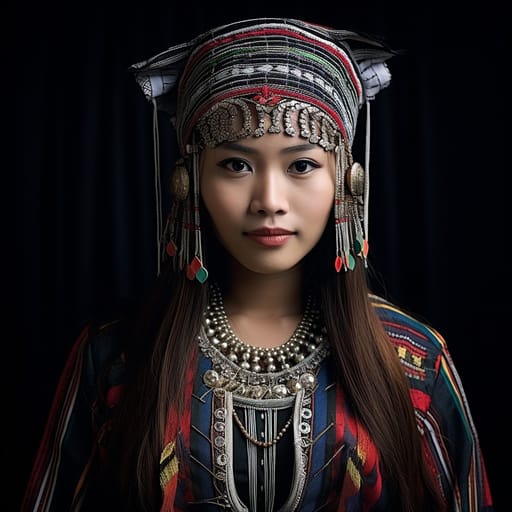
Catalog portraits for Kadazan-Dusun are AI-generated adult subjects; the measurements on this page come from documented photographs of real people, not from these images.
Iris color
n = 33 assessablePredominant color of the iris. Heterochromia is captured as its own value; mixed colors (e.g. hazel, blue-green) get distinct buckets.
| Value | Share | n | |
|---|---|---|---|
| dark brownIris appears nearly black under typical lighting; high melanin content. Common in East Asian, South Asian, Sub-Saharan African, and indigenous populations. | 97% | 32 | |
| blueTrue blue; highest frequency in Northern European populations, decreases southward. | 3% | 1 |
Vocabulary: Iris color (iris_color_qualitative)
Epicanthic fold
n = 33 assessablePresence and morphology of the epicanthic fold — the skin fold of the upper eyelid that may cover the medial canthus. Significant ethnic variation; high prevalence in East Asian, Central Asian, and indigenous American populations.
| Value | Share | n | |
|---|---|---|---|
| absentNo epicanthic fold; medial canthus clearly visible. | 9% | 3 | |
| present | 91% | 30 |
Vocabulary: Epicanthic fold (duke_elder_epicanthus_classification)
Eye shape
n = 33 assessableOverall shape of the visible eye, considering the silhouette of the upper and lower lid margins together. Independent dimension from eyelid_crease_type and epicanthic_fold, which capture finer morphological variation.
| Value | Share | n | |
|---|---|---|---|
| almondSlightly elongated horizontal axis; mild taper at lateral and medial canthi. Considered the aesthetic reference shape. | 97% | 32 | |
| monolidSmooth upper lid with no visible supratarsal crease. Common in East Asian populations; associated with single eyelid morphology. | 3% | 1 |
Vocabulary: Eye shape (eye_shape_qualitative)
Where these numbers come from
33 publicly documented portraits of notable Kadazan-Dusun people were assessed by a vision model against the catalog vocabulary, one row per portrait. Values are what the photographs show, read by a model, not population measurements. Each table counts only portraits where the value could be assessed; covered, obscured and unclear portraits are reported separately.
Notable-people corpora skew older, so hair color over-represents gray and white, and image quality varies. Treat shares as a description of this sample. Mean model confidence for this family: 0.82. 61% of portraits are high quality.
The same rows are published as image_observations in the catalog dataset; see the methodology. A family page exists only when at least 10 portraits carry an assessable value.