Garhwalis hair: texture and color in 26 observed portraits
Garhwalis: hair texture straight in 58% of 26; hair color black in 52% of 31.
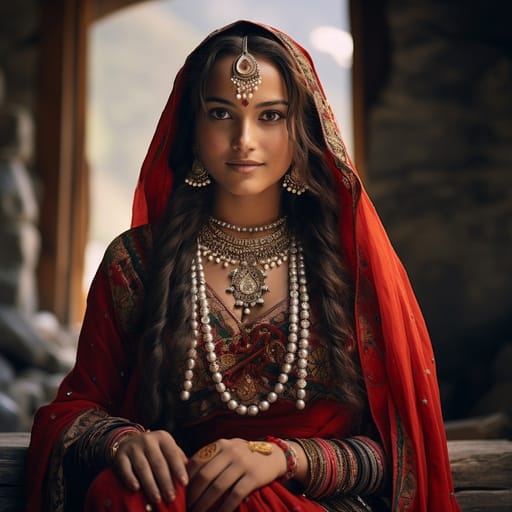
Catalog portraits for Garhwalis are AI-generated adult subjects; the measurements on this page come from documented photographs of real people, not from these images.
Hair texture
n = 26 assessable · 6 not assessableAndre Walker hair-texture classification covering the spectrum from straight (Type 1) to coily (Type 4), with subdivisions A-C within each numbered type.
| Value | Share | n | |
|---|---|---|---|
| straightStraight with medium body. | 58% | 15 | |
| wavyDefined S-waves; medium texture. | 35% | 9 | |
| curlyTighter, springy curls; corkscrew shape. | 8% | 2 |
Vocabulary: Hair texture (Andre Walker) (andre_walker_1990s)
Hair color
n = 31 assessable · 1 not assessablePredominant natural hair color, where determinable. Visibly dyed hair should be flagged via grooming-state metadata.
| Value | Share | n | |
|---|---|---|---|
| blackVery dark hair appearing black under normal lighting; high eumelanin. | 52% | 16 | |
| dark brownDistinctly brown but darker than medium-brown. | 16% | 5 | |
| red/auburnRed, auburn, or copper. High pheomelanin; correlated with MC1R variants. | 3% | 1 | |
| gray/whiteVisibly graying hair, mixed pigmented and unpigmented. | 29% | 9 |
Vocabulary: Hair color (hair_color_qualitative)
Where these numbers come from
32 publicly documented portraits of notable Garhwalis people were assessed by a vision model against the catalog vocabulary, one row per portrait. Values are what the photographs show, read by a model, not population measurements. Each table counts only portraits where the value could be assessed; covered, obscured and unclear portraits are reported separately.
Notable-people corpora skew older, so hair color over-represents gray and white, and image quality varies. Treat shares as a description of this sample. Mean model confidence for this family: 0.77. 50% of portraits are high quality.
The same rows are published as image_observations in the catalog dataset; see the methodology. A family page exists only when at least 10 portraits carry an assessable value.