Help us get this right
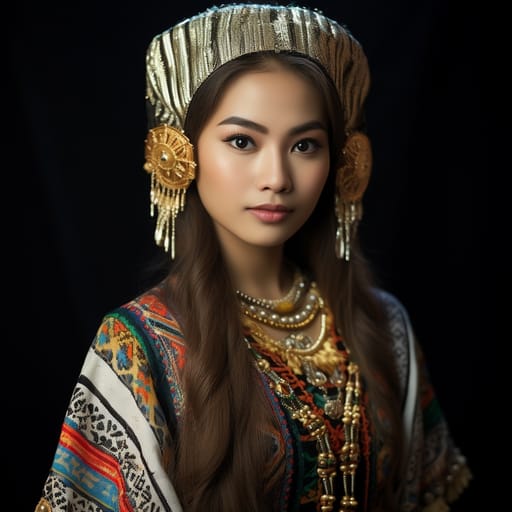
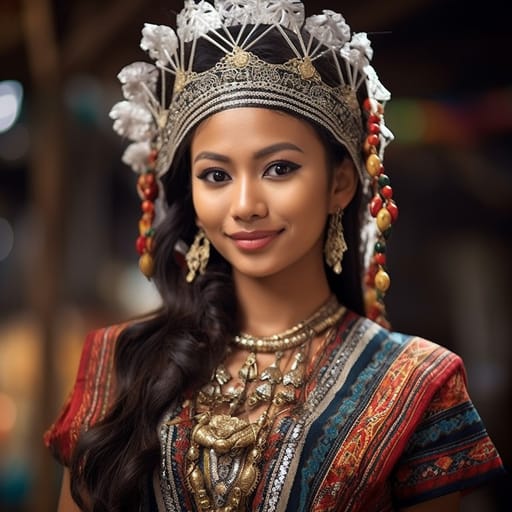
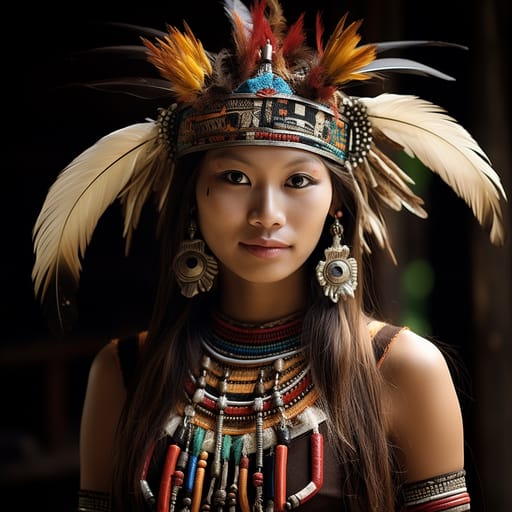
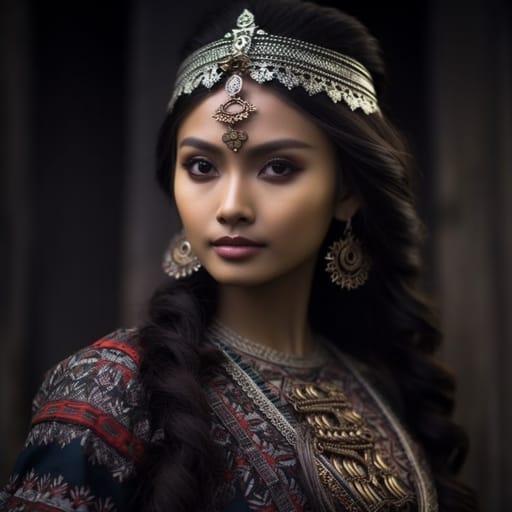
Does this portrait look right for Chinese Indonesian?
Nobody has judged this one yet. You would be the first.
Chinese Indonesian Erotic
Indonesia (Chinese-descended residents)
About Chinese Indonesian People
Related ethnic groups
Groups that share Chinese Indonesian's homeland, region, language, or religious tradition. These are likely candidates for comparative phenotype reference.
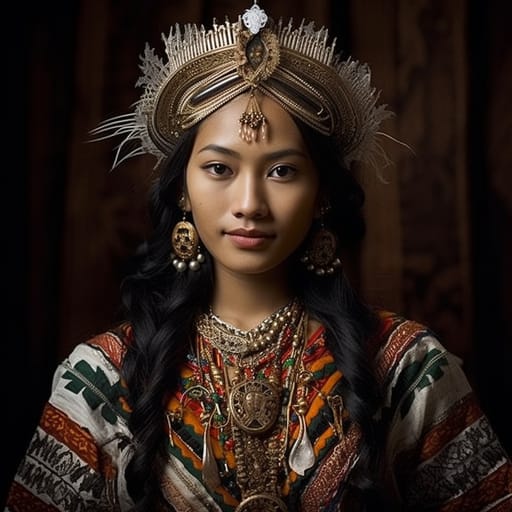
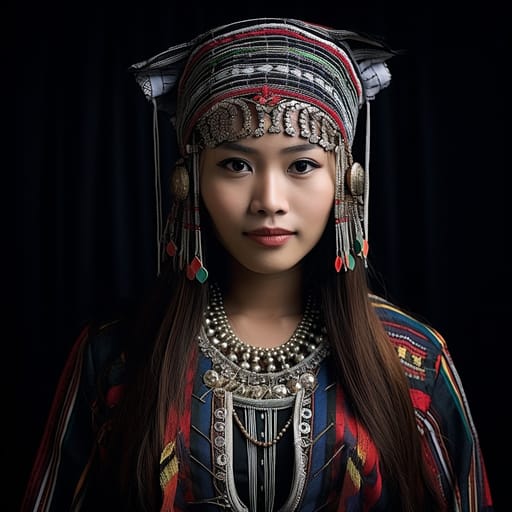
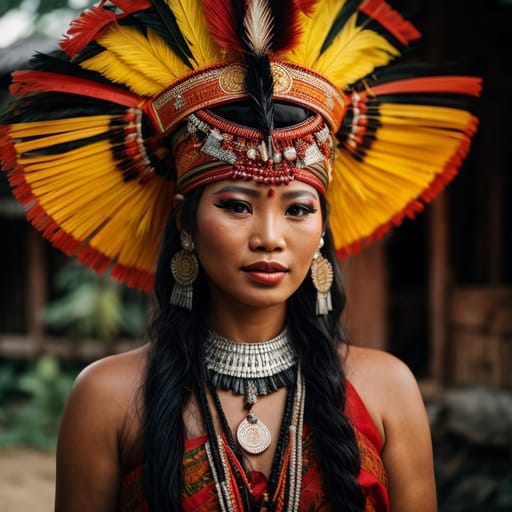
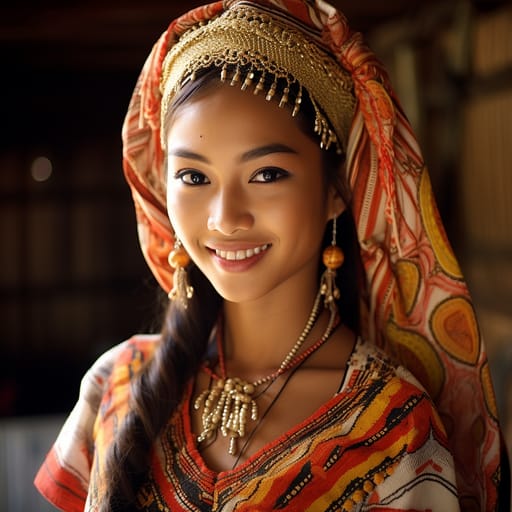
Geographic Distribution: Chinese Indonesian populations across 1 country
Each row is ranked by the group's share of that country's population, with the source citation drawn from published census and demographic surveys. Click through for the full per-country phenotype profile.
| Country | Share | Source |
|---|---|---|
| Indonesia | 1.2% | Indonesia 2010-2020 Census, Chinese Indonesian (~1.2%, ~2.8M+ self-identified, with substantially larger broader Chinese-descended population estimated at 5-7M+ when partial-Chinese-ancestry individuals are included); concentrated in Jakarta, Medan, Surabaya, Pontianak, Pematangsiantar, and other major cities. The Chinese-Indonesian community is one of the largest Chinese diaspora populations in Southeast Asia |
Typical Chinese Indonesian Phenotypes
Reference for AI generation: hair, eyes, skin, facial structure, build
Chinese Indonesian Body & Anatomy Reference
Anatomy by feature, Southeast Asian Austronesian / Austroasiatic phenotype
Chinese Indonesian Boobs & Breasts
Bust reference for Chinese Indonesian women: small-to-medium cup, modest projection, which is typical of Southeast Asian Austronesian / Austroasiatic ancestry. Areolas measure about 26-38mm across, with medium-brown to dark-brown pigmentation. Body type (ectomorph, petite frame) shapes the bust as well, so Chinese Indonesian tits are usually firm, modest projection. In AI imagery, keep the forward-set shape rather than drifting toward the fuller South Asian or Polynesian bust.
Chinese Indonesian Ass & Hips
The Chinese Indonesian ass is typically small-to-medium, modest projection, narrower hip profile, which sets it apart from the fuller glutes of the Pacific Islander phenotype. Underneath, the pelvis shows narrow-to-medium iliac crests, part of the Southeast Asian Austronesian / Austroasiatic skeletal pattern. For Chinese Indonesian butt pics and AI renders, match that silhouette and the overall build (ectomorph, petite frame).
Chinese Indonesian Vagina & Pussy
Chinese Indonesian pussy and vulvar anatomy presents medium-brown to dark-brown labial pigmentation, consistent with the Southeast Asian Austronesian / Austroasiatic phenotype's pigmentation pattern. Chinese Indonesian pubic hair is typically straight-to-wavy fine-to-medium texture, in the inverted-triangle pattern. For anatomically accurate Chinese Indonesian pussy renders the labial coloration should match the surrounding tan to medium-brown skin tone with a continuous gradient, and the hair should keep its straight-to-wavy fine-to-medium texture.
Chinese Indonesian Dicks & Penis
Chinese Indonesian dicks follow the Southeast Asian Austronesian / Austroasiatic reference data: regional mean ~11cm erect; moderate girth; medium-brown shaft pigmentation. Shaft color should track the tan to medium-brown skin tone with a smooth change toward the glans, and Chinese Indonesian pubic hair keeps its straight-to-wavy fine-to-medium texture.
Chinese Indonesian Body, Curves & Build
Chinese Indonesian body type and overall build presents as ectomorph, petite frame, with mean adult female BMI 20-23: the characteristic Southeast Asian Austronesian / Austroasiatic habitus. Chinese Indonesian curves and proportions should keep the regional skeletal frame (height, shoulder-to-hip ratio, limb proportions) rather than a generic mesomorph default.
Chinese Indonesian Skin Tone & Hair Texture
Chinese Indonesian skin sits in the tan to medium-brown (Fitzpatrick III-V) band. Hair is typically straight-to-wavy 1A-2A, dark-brown to black, in keeping with the Southeast Asian Austronesian / Austroasiatic phenotype. In nude renders the skin should stay one even tone from face to body, and body, pubic and head hair should match.
Explore phenotype categories
Structured taxonomy with peer-reviewed scales · 22 anatomical categories
Notable Chinese Indonesian People
100 reference figures, sourced from Wikipedia
- Poy Gum Lee, 李錦沛), Art Deco architect in New York City
- Roger Lee, Modernist architect in California and Hawaii
- Maya Lin, 林瓔), Minimalist architect (Vietnam Veterans Memorial)
- Liu Jipiao, 刘既漂), Art Deco architect and painter in China and later in U.S.
- I. M. Pei, 貝聿銘), Modernist architect based in New York City
- Goh Choo San, 吴诸珊), ballet dancer and choreographer
- Shen Wei, 沈伟), dancer, choreographer and visual artist; MacArthur fellow
- Fang-Yi Sheu, 許芳宜), principal dancer of the Martha Graham Dance Company
- Malan Breton, 马兰·布莱顿), fashion designer
- Luly Yang, fashion designer
- Angel Chang, fashion designer
- Monika Chiang, fashion designer
- Wenlan Chia, 賈雯蘭), fashion designer
- Doug Chiang, 江道格), movie designer and artist
- David Chu, 朱欽騏), co-founder of clothing company Nautica
- Diana Eng, fashion designer
- Joe Allen Hong, fashion designer for Neiman Marcus
- Jen Kao, fashion designer
- Jonathan Koon, fashion designer, business entrepreneur
- Derek Lam, fashion designer
- Phillip Lim, fashion designer
- Peter Mui, fashion designer, actor, and musician
- Mary Ping, fashion designer
- Peter Som, fashion designer
- Anna Sui, 蕭志美), fashion designer
- Vivienne Tam, 谭燕玉), fashion designer
- Yeohlee Teng, fashion designer
- Alexander Wang, 王大仁), fashion designer
- Kaisik Wong, fashion designer
- Vera Wang, 王薇薇), fashion designer
- Jason Wu, 吳季剛), fashion designer
- Joe Zee, creative director of Elle magazine; host of fashion TV series All on the Line
- Bette Bao Lord, 包柏漪), writer, novelist
- Eileen Chang, 张爱玲, a.k.a. 张煐), writer
- Kang-i Sun Chang, 孫康宜), writer and literary scholar
- Lan Samantha Chang, writer; director of the Iowa Writer's Workshop
- Victoria Chang, poet, children's writer, and essayist
- Ted Chiang, 姜峯楠), speculative fiction writer
- Frank Chin, 趙健秀), novelist, playwright, and essayist
- Marilyn Chin, 陈美玲), poet
- Ben Fee, 张恨棠/木云), writer and labor organizer
- David Henry Hwang, 黃哲倫), playwright
- Gish Jen, 任璧蓮), writer, novelist
- Ha Jin, 哈金), novelist, winner of the National Book Award for Waiting
- Maxine Hong Kingston, novelist, The Woman Warrior
- R. F. Kuang, 匡灵秀), fantasy novelist, The Poppy War
- Jean Kwok, writer, novelist
- Edward Michael Law-Yone, writer, journalist; father of Wendy Law-Yone
- Gus Lee, 李健孫), writer
- Yiyun Li, 李翊雲), winner of the 2006 PEN/Hemingway Award
- Ed Lin, 林景南), writer, first author to win three Asian American Literary Awards
- Tao Lin, 林韜), writer
- Eric Liu, 劉柏川), author and speechwriter for former US President Bill Clinton
- Malinda Lo, writer, young adult novels, Ash
- David Wong Louie, 雷祖威), writer
- Marie Lu, 陸希未), writer
- Ling Ma, writer, Severance
- Adeline Yen Mah, 馬嚴君玲), author and physician
- William Marr, 馬為義,非馬), engineer, poet, translator, and artist
- Chanel Miller, artist and author of Know My Name
- Anchee Min, 閔安琪), author, Red Azalea
- Celeste Ng, 伍綺詩), writer, novelist
- Sui Sin Far, 水仙花), late 19th/early 20th century Chinese-English American author and journa…
- Mai-mai Sze, writer and artist
- Amy Tan, 譚恩美), best-selling author, The Joy Luck Club
- Jade Snow Wong, 黃玉雪), writer
- Shawn Wong, novelist, Homebase, American Knees; writer; professor
- Timothy C. Wong, 黃宗泰), sinologist, translator, and literary theorist
- Xu Xi, 許素細), English language novelist based in Hong Kong
- Geling Yan, 严歌苓) to novelist and screenwriter
- Gene Luen Yang, 楊謹倫), graphic novelist, whose book American Born Chinese was the first graphi…
- Laurence Yep, 叶祥添), two-time winner of the Newbery Honor
- Connie Young Yu, writer, historian, lecturer, and 2016 "Woman of the Year" California Senate D…
- Kat Zhang, author of young adult and middle grade novels
- Jenny Zhang, essayist, poet, novelist
- Jenny Tinghui Zhang, novelist
- Ping Chong, 張家平), contemporary theater director
- Dan Kwong, playwright
- BD Wong, Tony Award-winning actor, M Butterfly, Law & Order: Special Victims Unit
- Bernice Bing, painter
- Cai Guo-Qiang, 蔡國強), artist and gunpowder works designer
- Ernie Chan, comic book artist/inker for Marvel Comics and DC Comics.
- Ching Ho Cheng, Cuban-born contemporary artist
- Alan Chin, multidisciplinary artist
- Lenore Chinn, realist painter
- Han Hsiang-ning, 韓湘寧), painter
- Hon Chew Hee, Chinese-Hawaiian painter
- Haven Lin-Kirk, artist and designer, Dean of the USC Gayle Garner Roski School of Art and Design
- Hung Liu, 劉虹), painter
- Reagan Louie, American photographer
- Seong Moy, painter and printmaker
- Mimi So, jewelry designer
- May Sun, artist, public art
- Fan Tchunpi, painter, ceramicist
- Frank Wong, dioramist
- James Wong Howe, 黃宗霑), nominated for ten Academy Awards for cinematography, won twice (1955, 1…
- Marjorie Wong Hee, Chinese-Hawaiian painter, teacher
- Martin Wong, painter
- Tyrus Wong, 黃齊耀), artist
- Frank Wu, science-fiction illustrator
Erotic Poses & Sex Positions
From the pose catalog: 219 named positions with reference skeletons
Frequently asked questions about Chinese Indonesian people
Where is the Chinese Indonesian homeland?
The Chinese Indonesian homeland is Indonesia (Chinese-descended residents) in Southeast Asia.
What countries do Chinese Indonesian people live in?
Chinese Indonesian populations are documented across 1 country: Indonesia.






Make your own Chinese Indonesian images
Five a day, free, no credits to buy. The studio starts from this group's phenotype data, so you can set body type, pose and style and keep the traits accurate.
Start with Chinese Indonesian